








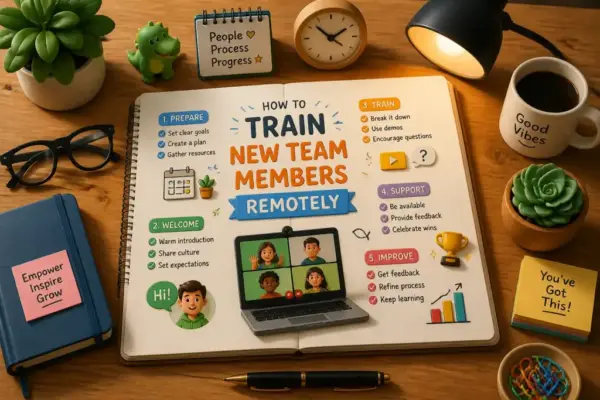
How to Train New Team Members Remotely
Start by outlining the objectives of their role and how they contribute to the team and the company.
Start by outlining the objectives of their role and how they contribute to the team and the company.

Many believe complex tools are necessary for effective project management. A simpler software can often enhance collaboration and streamline tasks more effectively.

Many believe email is the best way to communicate. However, real-time tools offer quicker, more effective collaboration for teams of all sizes.

Many believe that team growth relies solely on strict management. Instead, nurturing a learning environment builds collaboration and drives real progress.

When leaders embrace feedback and invite team input, it creates a safe space for open dialogue. Consider holding regular meetings where team members can discuss challenges and suggest improvements.

Many people feel overwhelmed by work demands. Setting clear boundaries can enhance your productivity and improve your overall quality of life.

Measuring team performance effectively starts with identifying the right metrics. Focus on aspects that directly impact productivity and teamwork.

Most workers crave feedback, yet many avoid giving it. Properly delivered constructive feedback can boost performance and strengthen remote team bonds.

Building strong connections with remote colleagues improves teamwork. Regular communication habits and effective tools keep everyone engaged and informed.

Enhanced collaboration in remote teams leads to better project outcomes. Building strong relationships is key to achieving this goal.

Many struggle to keep their focus while working from home. Creating a structured routine and a designated workspace can help boost productivity significantly.

Team bonding activities can transform a dull virtual meeting into an energetic and collaborative session. Stronger connections lead to better teamwork and productivity.