









Table of Contents
Identifying the Right Metrics
Understanding which metrics matter is the first step in analyzing marketing strategies effectively. Metrics provide insight into how well your current strategies are performing. Focus on key performance indicators (KPIs) such as conversion rates, customer acquisition cost, and return on investment (ROI). These figures help clarify which areas need improvement.
- Regularly assess your marketing metrics for better decision-making.
- Use customer feedback to refine your marketing efforts effectively.
- Stay updated with industry trends to remain relevant.
Using digital tools allows for real-time tracking of these metrics. For example, Google Analytics is popular for evaluating website performance. It shows how many visitors come to your site, where they originate, and which pages they visit. This data is crucial for determining the effectiveness of your marketing strategies.
Social media analytics tools like Hootsuite or Buffer give insights into engagement rates across different platforms. Knowing which posts get the most likes, shares, or comments can inform future content strategies. Identifying these metrics helps paint a clearer picture of what works and what doesn’t.
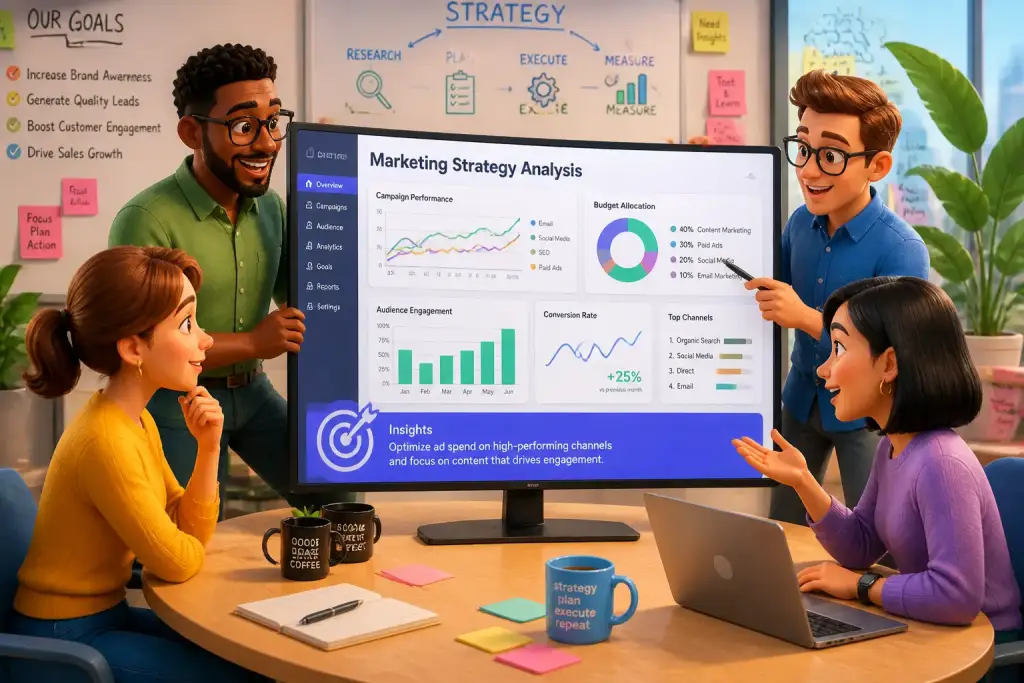
Consider creating a dashboard that consolidates all your important metrics in one view. This visual representation simplifies monitoring trends and spotting anomalies quickly. By focusing on the right metrics, you can create data-driven decisions that enhance your marketing outcomes.
Gathering Customer Feedback
Customer feedback is a gold mine for improving marketing strategies. Engaging with your audience tells you what resonates with them and what doesn’t. Use surveys, interviews, and social media polls to gather insights directly from your customers. This information can be invaluable.
For instance, a company might send out a survey asking customers about their recent purchase experience. The results may show that customers appreciate quick service but feel the product descriptions lack detail. This feedback can guide adjustments in both marketing messaging and product presentation.
Incorporating reviews and testimonials into your marketing strategies can also boost credibility. Highlighting positive experiences encourages new customers to trust your brand. Additionally, responding to negative feedback shows that you are committed to customer satisfaction. This two-way communication can help you refine your strategies further.
Methods for Collecting Feedback
- Online Surveys: Use tools like SurveyMonkey to craft surveys that gauge customer satisfaction.
- Social Media Polls: Leverage platforms like Instagram or Twitter for quick feedback on specific questions.
- In-Person Interviews: Gather valuable insights from loyal customers about their experiences.
Incorporating customer feedback into your marketing strategy creates a more customer-centric approach. This method not only improves current strategies but also helps identify new opportunities for growth.
Analyzing Competitor Strategies
Keeping an eye on competitors can provide insights into improving your marketing strategies. Understanding what others in your industry are doing can uncover gaps in your own approach. Regularly assess competitor websites, social media, and advertising campaigns to identify successful tactics.
One effective way to analyze competitors is by conducting a SWOT analysis (Strengths, Weaknesses, Opportunities, Threats). This tool helps you understand where you stand compared to others. For example, if a competitor’s social media engagement is high due to entertaining content, consider how you can improve your own content to capture similar engagement.
Steps for Competitor Analysis
- Identify Key Competitors: Choose 3-5 businesses that directly compete in your market.
- Review Their Online Presence: Look at their websites, social media, and content marketing strategies.
- Analyze Their Customer Engagement: Observe how they interact with customers and the feedback they receive.
- Assess Their Marketing Channels: Determine which platforms they use and how effective they are.
After gathering this information, compare it against your own strategies. Identify areas where you can innovate or improve. By understanding your competition, you can adjust your approach to stand out more effectively in the market.
Utilizing Marketing Automation Tools
Modern tools streamline many marketing processes, making them more efficient and effective. Marketing automation platforms like HubSpot or Mailchimp help manage campaigns, track performance, and analyze data. These tools can automate email marketing, social media posting, and even customer segmentation.
With automation, you can set up campaigns that trigger based on customer actions. For instance, if a customer abandons their shopping cart, an automated email can remind them to complete the purchase. This targeted approach often results in higher conversion rates and improved customer retention.
However, it is essential to regularly review and adjust these automated campaigns. Data from past campaigns can inform what works best. If a particular email subject line consistently performs well, consider using similar strategies in future campaigns. Testing different approaches can also provide insights into customer preferences.
Benefits of Marketing Automation
- Enhanced Efficiency: Save time by automating repetitive tasks.
- Improved Targeting: Use data to segment audiences and personalize messages.
- Data-Driven Decisions: Collect and analyze data easily for better insights.
Using marketing automation tools allows for more precise targeting and better analysis of marketing strategies. Adjusting based on data-driven insights can lead to improved overall performance.
Adapting to Market Trends
Staying relevant in a fast-paced market is essential. Trends can change quickly, and brands need to adapt their strategies accordingly. Following industry news, attending conferences, and participating in online forums can keep you informed about shifts in consumer behavior.
For example, a brand may notice a growing trend toward sustainability. By adjusting their marketing strategies to highlight eco-friendly practices, they can appeal to a wider audience. This adaptability not only enhances customer engagement but also strengthens brand loyalty.
Keeping an eye on technological advancements can improve your marketing efforts. New tools and platforms often emerge, changing how businesses connect with consumers. For instance, the rise of TikTok has transformed social media marketing. Brands that leverage this platform effectively can reach younger audiences more successfully.
Strategies for Staying Updated
- Subscribe to Industry Newsletters: Regular updates from credible sources can keep you informed.
- Join Professional Groups: Engage with others in your field to share insights and experiences.
- Attend Workshops and Conferences: These events often showcase the latest trends and strategies.
By adapting to market trends, you ensure that your marketing strategies remain relevant and effective. This proactive approach positions your brand as a leader in the industry.
Set a consistent schedule to evaluate your marketing metrics, ensuring you can quickly identify areas for adjustment and improvement.
Implementing Continuous Improvement
Continuous improvement is a mindset that should permeate all marketing strategies. After analyzing data, gathering feedback, and adjusting tactics, it is crucial to implement a process for ongoing evaluation. This ensures that strategies evolve with changing consumer needs and market conditions.
Establish regular check-ins to review performance. Monthly or quarterly meetings can help teams assess what strategies are working and which need adjustment. Encourage team members to share insights from their experiences, building a culture of learning and growth.
Investing in ongoing training is also essential. Consider providing workshops on new marketing techniques, tools, and trends. Empowering your team to learn continuously can lead to innovative ideas that enhance marketing efforts.
Steps for Continuous Improvement
- Set Clear Goals: Define what success looks like for your team.
- Encourage Feedback: Create an environment where team members can share insights freely.
- Review and Adjust: Regularly analyze performance data and make necessary changes.
By committing to continuous improvement, your marketing strategies will not only adapt to current trends but also anticipate future shifts. This proactive approach can lead to sustained success in a competitive landscape.