









Table of Contents
Why SEO Tools Matter for Startups
SEO tools play a vital role in enhancing the online presence of startup websites. In today’s competitive digital world, the right tools can help startups identify and leverage opportunities to improve their visibility on search engines. Proper usage of these tools can lead to increased organic traffic, which is crucial for growth and sustainability. Startups often operate with limited resources and time. Utilizing effective SEO tools allows them to focus their efforts where they will have the most impact.
- Utilize keyword research tools to identify high-traffic opportunities.
- Employ analytics platforms for data-driven decisions and strategy adjustments.
- Monitor website performance continuously for optimization improvements.
Many startups overlook the importance of SEO in the early stages. They may prioritize product development and other immediate business needs. However, failing to implement SEO strategies can result in missed opportunities to attract potential customers. By integrating SEO tools into their marketing strategies from the beginning, startups can establish a solid foundation for long-term success. The right tools help in keyword research, site audits, competitive analysis, and performance tracking.
SEO tools can simplify complex tasks. They provide insights into user behavior, helping startups tailor their content and marketing strategies to meet audience needs effectively. For example, tools that analyze search trends can guide startups in creating relevant content that resonates with their target market. By using these resources, startups can enhance their website’s visibility, drive more traffic, and ultimately increase conversions.
Keyword Research Tools
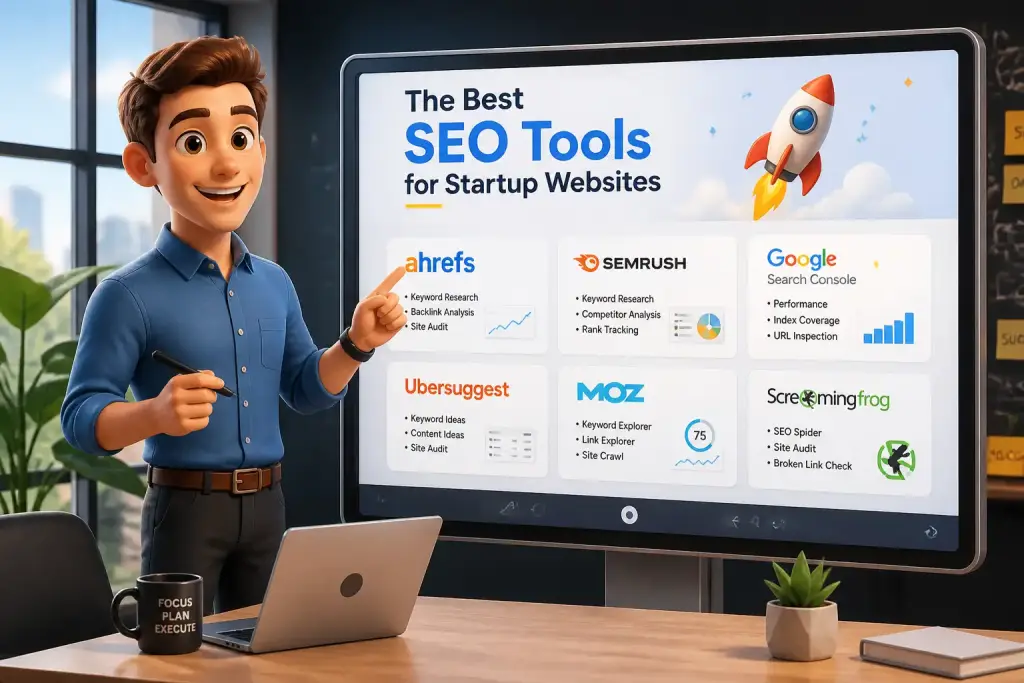
Keyword research tools are essential for identifying the terms potential customers use when searching online. These tools help startups discover high-value keywords that can attract targeted traffic to their websites. Understanding which keywords to target allows startups to create content that meets user intent, improving their chances of ranking higher in search results. Popular keyword research tools include Google Keyword Planner, Ahrefs, and SEMrush.
Google Keyword Planner is a free tool that provides insights into keyword search volume and competition levels. Startups can use it to find relevant keywords in their niche. Ahrefs and SEMrush offer more advanced features, including competitor keyword analysis and keyword gap analysis. This functionality enables startups to identify keywords their competitors rank for and explore opportunities to fill those gaps.
Steps to Conduct Keyword Research
- Identify your target audience and their needs.
- Use keyword research tools to generate a list of potential keywords.
- Analyze search volume and competition for each keyword.
- Select a mix of short-tail and long-tail keywords based on your findings.
With a well-researched list of keywords, startups can create content that is more likely to attract and convert visitors. Optimizing website content around these keywords is crucial for improving search engine rankings and achieving better visibility online.
Site Audit Tools
Site audit tools help startups assess their website’s health and performance. These tools analyze various aspects of a website, including loading speed, mobile responsiveness, broken links, and overall user experience. Regular audits are necessary to identify and fix issues that could negatively affect SEO. Tools like Screaming Frog, Moz, and Google Search Console can provide valuable insights into the technical aspects of a website.
Screaming Frog is a desktop program that crawls websites and generates detailed reports on SEO issues. It can identify broken links, duplicate content, and missing metadata. Moz offers a user-friendly interface for site audits, providing actionable recommendations to improve SEO performance. Google Search Console is an excellent free resource for monitoring a site’s presence in Google search results, alerting users to issues that may hinder performance.
Conducting a Site Audit
- Run a crawl using your chosen site audit tool.
- Review the generated report for technical issues.
- Prioritize the issues based on their impact on SEO.
- Implement corrective actions and monitor the results.
Performing regular site audits ensures that startups maintain optimal performance and can quickly adapt to changes in search engine algorithms. This proactive approach helps improve user experience, which is essential for retaining visitors and converting them into customers.
Analytics Platforms
Analytics platforms are critical for tracking website performance and understanding user behavior. They provide insights into traffic sources, user demographics, and engagement metrics. For startups, platforms like Google Analytics and Matomo offer powerful tools to analyze performance data. Understanding how users interact with a website allows startups to refine their strategies for better results.
Google Analytics is widely used and offers a wealth of features. Startups can track page views, user sessions, and bounce rates, among other metrics. This data helps them identify which pages are performing well and which need improvement. Matomo, on the other hand, is an open-source alternative that provides complete data ownership, allowing startups to analyze user behavior without sharing information with third parties.
Setting Up Google Analytics
- Create a Google Analytics account and set up a property for your website.
- Add the tracking code to your website’s pages.
- Define your goals and conversions within the platform.
- Regularly review your analytics reports to gather insights.
By leveraging analytics platforms, startups can make data-driven decisions that enhance marketing efforts and improve overall business performance. This information is invaluable for optimizing content, targeting the right audience, and enhancing the user experience.
Consistently update content and refine keywords based on ongoing research to stay relevant and competitive in search results.
Backlink Analysis Tools
Backlinks are essential for improving a website’s authority and search engine ranking. Analyzing backlinks helps startups understand their link profile and identify opportunities for acquiring new links. Tools like Ahrefs, Moz, and SEMrush provide insights into backlink quality and quantity. By examining the backlinks of competitors, startups can discover potential sources for their link-building efforts.
Ahrefs is particularly well-regarded for its backlink analysis capabilities. It offers a comprehensive overview of a website’s backlink profile, including the number of referring domains and the quality of links. Moz provides a similar service with its Link Explorer tool, which evaluates the authority of backlinks and helps users identify toxic links that may harm their SEO. SEMrush also includes backlink analysis features, allowing startups to track their link-building progress over time.
Building a Backlink Strategy
- Analyze competitors’ backlinks to find potential linking websites.
- Create valuable content that others want to link to.
- Engage in outreach campaigns to request backlinks from relevant sites.
A robust backlink strategy is vital for boosting a startup’s online authority. By focusing on acquiring high-quality backlinks, startups can improve their search rankings and drive more organic traffic to their websites.
Content Optimization Tools
Content optimization tools help startups create high-quality content that resonates with their target audience. These tools analyze content for keyword usage, readability, and overall structure. Tools like Yoast SEO, Clearscope, and SEMrush’s SEO Writing Assistant are invaluable for ensuring that content is optimized for both search engines and users.
Yoast SEO is a popular plugin for WordPress that provides real-time feedback on content optimization. It analyzes readability, keyword density, and overall SEO performance. Clearscope offers a more advanced content optimization platform that suggests relevant keywords and phrases to include in content based on top-ranking pages. This ensures that the content aligns with user search intent.
Optimizing Your Content
- Identify target keywords and incorporate them naturally into your content.
- Ensure proper use of headings and subheadings for better structure.
- Improve readability by using short paragraphs and bullet points.
- Incorporate images and videos to enhance engagement.
By utilizing content optimization tools, startups can create engaging content that attracts visitors and encourages them to stay on the site longer. High-quality content is key to building trust and authority in any niche.
Monitoring and Reporting Tools
Monitoring and reporting tools are essential for tracking the effectiveness of SEO efforts. These tools help startups assess their performance over time and make informed decisions based on data. Google Search Console, Ahrefs, and SEMrush provide valuable insights into search visibility and keyword rankings.
Google Search Console is a free tool that allows startups to monitor their website’s performance in Google search results. It provides data on search queries, page performance, and indexing issues. Ahrefs and SEMrush offer more comprehensive reporting features, allowing startups to track their keyword rankings, backlinks, and overall site performance.
Creating Effective Reports
- Define key performance indicators (KPIs) relevant to your SEO strategy.
- Utilize monitoring tools to gather data on these KPIs.
- Generate reports that highlight successes and areas for improvement.
Regular monitoring and reporting are crucial for understanding the impact of SEO efforts. Startups can use this data to adjust their strategies and continue improving their online presence in an ever-changing digital world.
Maximizing Your SEO Toolkit
Combining various SEO tools can significantly enhance a startup’s digital marketing strategy. By using a mix of keyword research, site audit, analytics, backlink analysis, content optimization, and monitoring tools, startups can create a comprehensive approach to SEO. This holistic strategy allows startups to identify strengths and weaknesses, enabling continuous improvement over time.
Startups should prioritize tools that fit their specific needs and budget. Free tools like Google Analytics and Google Search Console are excellent starting points. As their needs grow, they can consider investing in paid tools like Ahrefs or SEMrush for more advanced features. The key is to remain consistent and adaptable, regularly revisiting and refining strategies based on the insights gained from these tools.
Effective SEO is an ongoing process. As search engine algorithms evolve, startups must stay informed about the latest trends and best practices. Continually optimizing their websites and content will help them remain competitive and successful in their industry.