








Table of Contents
Encourage Open Communication and Feedback
Open communication is vital for nurturing a growth mindset within a marketing team. When team members feel safe sharing their thoughts and ideas, creativity flourishes. Create an environment where feedback is encouraged and valued. This can be achieved through regular one-on-one meetings and team discussions. For example, using tools like anonymous surveys can help collect honest feedback, making everyone feel heard.
- Encourage open feedback to promote a culture of learning and improvement.
- Provide resources for continuous skill development and personal growth.
- Celebrate small wins to motivate team members and boost morale.
To implement this, establish a routine where team members can share their thoughts on ongoing projects. Encourage them to express what works, what doesn’t, and why. These discussions can lead to innovative approaches and solutions. Additionally, celebrate constructive criticism as a means to grow rather than as a setback. This approach fosters resilience and adaptability among team members, key traits of a growth mindset.
Consider creating a feedback cycle where team members can review each other’s work. This not only builds trust but also helps individuals understand different perspectives. Use this feedback to guide future projects, helping the entire team to learn from past experiences. Open communication, paired with constructive feedback, lays the foundation for a robust growth mindset.
Provide Continuous Learning Opportunities
Continuous learning is essential for developing a growth mindset in your marketing team. The marketing landscape is constantly changing, with new tools and trends emerging regularly. Team members must stay updated to remain competitive. Providing opportunities for learning can include workshops, online courses, and industry conferences. These experiences enhance skills and motivate team members to strive for more.
Incorporating a learning platform where individuals can access resources at their own pace fosters a culture of self-improvement. Consider dedicating a budget for professional development that allows team members to select courses that interest them. This autonomy encourages motivation and engagement. Tracking progress can also highlight individual achievements and areas for growth.
Steps to Facilitate Continuous Learning
- Assess the current skills of your team members and identify gaps.
- Research relevant training programs and online courses.
- Encourage team members to share their learning experiences and insights.
- Set aside time during team meetings for knowledge sharing.
By providing a variety of learning resources, team members can expand their skill sets. This not only benefits individual growth but also enhances the overall capabilities of the marketing team. Building a culture of continuous learning keeps the team agile and responsive to changes in the industry.
Promote Collaboration and Teamwork
Collaboration is a driving force behind a successful marketing team. When individuals work together, they combine their unique strengths, leading to innovative ideas and solutions. Encourage a collaborative atmosphere by organizing team-building activities and projects. These initiatives can help break down barriers and foster trust among team members.
Utilizing collaborative tools can streamline communication and enhance teamwork. Platforms like Slack or Microsoft Teams facilitate real-time communication, making it easier for team members to share ideas and resources. Regular brainstorming sessions can also boost team creativity, allowing individuals to contribute their thoughts freely.
Ways to Foster Team Collaboration
- Organize regular team-building exercises to build rapport.
- Encourage cross-functional projects to leverage diverse skills.
- Implement collaborative software to improve project management.
- Set team goals that require input and effort from all members.
When team members feel connected and supported, they are more likely to take risks and share innovative ideas. This collaborative spirit contributes to a growth mindset, where individuals feel empowered to tackle challenges together.
Celebrate Achievements and Learn from Failures
Recognizing achievements is vital for maintaining a positive team morale. Celebrating both small and large wins reinforces the idea that effort leads to success. Whether it’s hitting a campaign goal or completing a project ahead of schedule, acknowledging these milestones motivates team members to continue striving for excellence.
However, not all efforts will lead to success. A growth mindset thrives on learning from failures. Encourage team members to view setbacks as opportunities for growth. After a failed campaign, host a debriefing session to discuss what went wrong and how to improve in the future. This practice transforms failures into valuable learning experiences.
Steps to Celebrate and Learn
- Set up a recognition program to highlight individual and team achievements.
- Hold regular meetings to discuss lessons learned from unsuccessful projects.
- Create a visual board displaying both achievements and challenges faced.
- Encourage team members to share personal success stories and lessons from failures.
By celebrating achievements and embracing failures, you create a culture that encourages perseverance and resilience. Team members will be more willing to take risks when they know their efforts will be recognized and that failures are part of the growth process.
Regularly schedule brainstorming sessions to encourage creativity and collaboration among team members. Focus on innovative solutions without the fear of failure.
Encourage a Healthy Work-Life Balance
Maintaining a healthy work-life balance is crucial for a growth mindset. Team members who feel overworked may become disengaged and less productive. Encourage employees to take breaks, use vacation days, and prioritize their well-being. Implementing flexible work hours can also help them manage their time effectively.
Promoting wellness initiatives like yoga classes, mental health days, or wellness challenges can enhance team morale. When individuals feel supported in their personal lives, they are more likely to be motivated and engaged at work. A healthy work-life balance fosters creativity and innovation, both essential for a growth mindset.
Tips for Encouraging Balance
- Offer flexible scheduling options to accommodate personal needs.
- Promote regular breaks during the workday to recharge.
- Organize team activities focused on wellness and relaxation.
- Encourage open discussions about mental health and stress management.
By prioritizing a healthy work-life balance, you create an environment where team members can thrive. They will feel more empowered to contribute creatively and approach challenges with a positive mindset.
Lead by Example as a Manager
As a manager, your behavior sets the tone for the entire team. Demonstrating a growth mindset through your actions inspires team members to adopt the same attitude. Share your own experiences of learning and growth, including challenges you have faced. This transparency fosters trust and encourages team members to be open about their journeys.
Encourage team members to take initiative and make decisions. Allow them the freedom to experiment and explore new ideas. When they see you embracing challenges and learning from failures, it reinforces the importance of a growth mindset. Regularly communicate the value you place on learning and development.
Leadership Practices to Inspire Growth
- Share personal stories of growth and lessons learned.
- Encourage risk-taking by providing support for new ideas.
- Regularly revisit and adjust team goals based on feedback and experiences.
- Communicate openly about challenges and how you overcame them.
Leading by example creates a culture where team members feel inspired to grow and learn continuously. When they see their manager embodying a growth mindset, they are more likely to adopt similar attitudes toward their work.
Creating a Lasting Culture of Growth
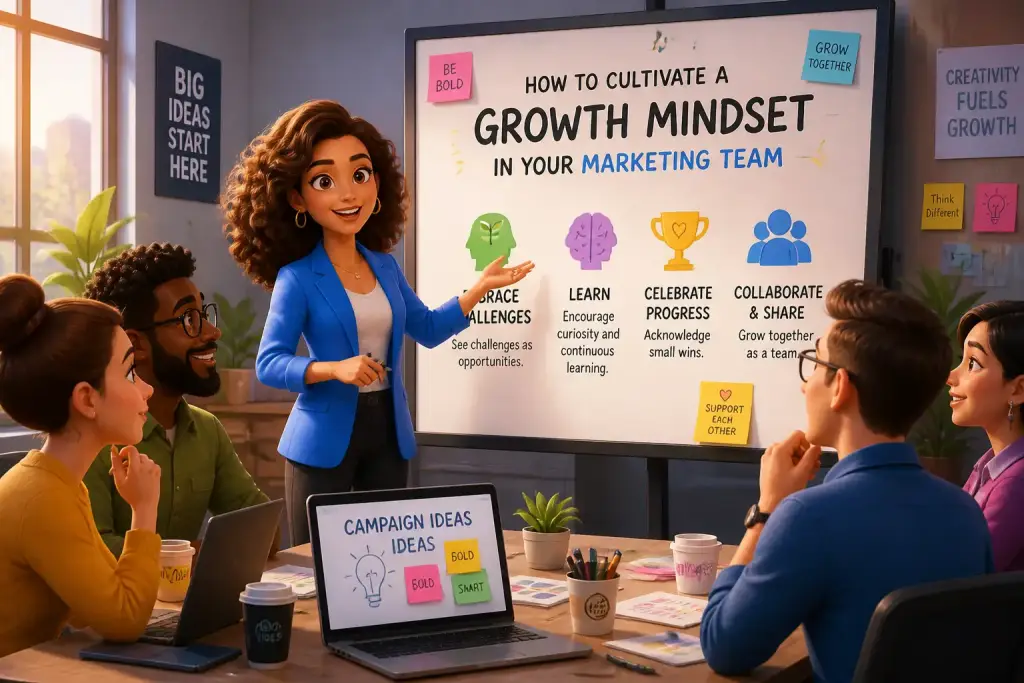
Building a growth mindset within your marketing team is not a one-time effort; it requires ongoing commitment and dedication. By implementing the strategies discussed, you can create a lasting culture of growth that fosters creativity, resilience, and collaboration. This environment enables team members to thrive, take risks, and continuously improve.
Regularly assess the effectiveness of your initiatives. Gather feedback from team members to understand what works and what needs adjustment. Celebrate successes and acknowledge areas for improvement. This continuous cycle of feedback and adaptation will help maintain a vibrant growth mindset culture.
As the marketing landscape evolves, so should your strategies. Keep an eye on emerging trends and be willing to adapt your approach. A team that embraces change and challenges is better equipped to succeed in a competitive environment. Investing in a growth mindset not only benefits individual team members but also enhances overall team performance.
In summary, nurturing a growth mindset within your marketing team can lead to greater creativity, improved collaboration, and enhanced problem-solving capabilities. By building a culture of open communication, continuous learning, and supportive leadership, you will empower your team to reach new heights.