









Table of Contents
Defining Your Target Audience
Understanding your target audience is the cornerstone of any successful digital marketing strategy. Startups often make the mistake of trying to appeal to everyone, which can dilute their efforts and resources. Instead, focus on identifying specific demographics such as age, gender, location, interests, and online behavior. This clarity helps tailor your messaging and marketing campaigns to resonate with the right people.
- Define clear target audiences to tailor marketing efforts effectively.
- Utilize social media platforms to engage with potential customers.
- Measure and analyze performance metrics to refine strategies.
Begin by conducting market research through surveys, interviews, and social media analytics. Tools like Google Analytics can provide insights into who visits your website. Analyze competitors to see who their customers are and how they engage with them. This data will help you create detailed buyer personas. These personas will serve as a guide for your marketing strategies, ensuring that your content speaks directly to those you want to attract.
Once you create your buyer personas, use them to influence your content marketing, social media engagement, and advertising strategy. By aligning your marketing efforts with the interests and needs of your target audience, you can enhance engagement and increase conversion rates. This focused approach will save you time and resources, allowing you to invest in tactics that yield results.
Building a Compelling Brand Identity
Your startup’s brand identity sets you apart in the crowded digital marketplace. This identity includes your logo, color scheme, typography, and overall visual style. It also encompasses your brand’s voice and messaging tone. A strong brand identity fosters recognition and builds trust with consumers. Start by brainstorming what you want your brand to represent and the emotions you want to evoke in your audience.
After defining your brand values, create visual elements that reflect them. Design a logo that captures the essence of your business. Choose colors that evoke the right feelings; for instance, blue often conveys trust, while red can represent excitement. Ensure that your brand identity is consistent across all platforms, including your website, social media, and marketing materials.
Maintaining a consistent brand voice is essential. Whether your tone is professional, friendly, or humorous, ensure it aligns with your audience’s preferences. This consistency enhances brand recognition and trust. For practical steps, consider creating a brand style guide that outlines your visual and verbal identity. This guide will be useful for anyone involved in your marketing efforts, ensuring a unified presentation of your brand.
Creating Quality Content
Content marketing plays a vital role in establishing your startup’s presence online. Quality content not only attracts potential customers but also builds authority and trust in your industry. Focus on providing valuable information that addresses the needs and interests of your target audience. This could include blog posts, videos, infographics, or podcasts.
Start by brainstorming topics that resonate with your audience. Use tools like BuzzSumo to find trending topics in your industry. Create a content calendar to plan and schedule your posts, ensuring a steady stream of fresh content. Consistency is vital, so establish a realistic posting schedule that you can maintain.
Optimize your content for search engines to improve visibility. This involves using relevant keywords, crafting engaging headlines, and incorporating internal links. For example, linking to articles like top email marketing tools can provide additional value to your readers and improve your site’s SEO performance. Monitor the performance of your content using analytics tools, adjusting your strategy based on what works best.
Focus on building an authentic brand voice that resonates with your audience to create lasting connections and customer loyalty.
Leveraging Social Media Platforms
Social media is a powerful tool for startups to connect with their audience. It allows you to engage directly with potential customers and build a community around your brand. Choose platforms that align with your target audience. For instance, if you are targeting young adults, platforms like Instagram or TikTok may be more effective than LinkedIn.
Develop a content strategy for each platform, focusing on the type of content that performs best. For example, visual content like images and videos tends to perform well on Instagram, while informative articles are more suitable for LinkedIn. Engage with your audience by responding to comments and messages, and encourage user-generated content to build a sense of community.
Consider running targeted ad campaigns on social media. These ads allow you to reach specific demographics and can be tailored to promote special offers or new products. Regularly analyze the performance of your social media efforts to understand what resonates with your audience. For additional insights, check out our article on using social media wisely to maximize your results.
Implementing Email Marketing
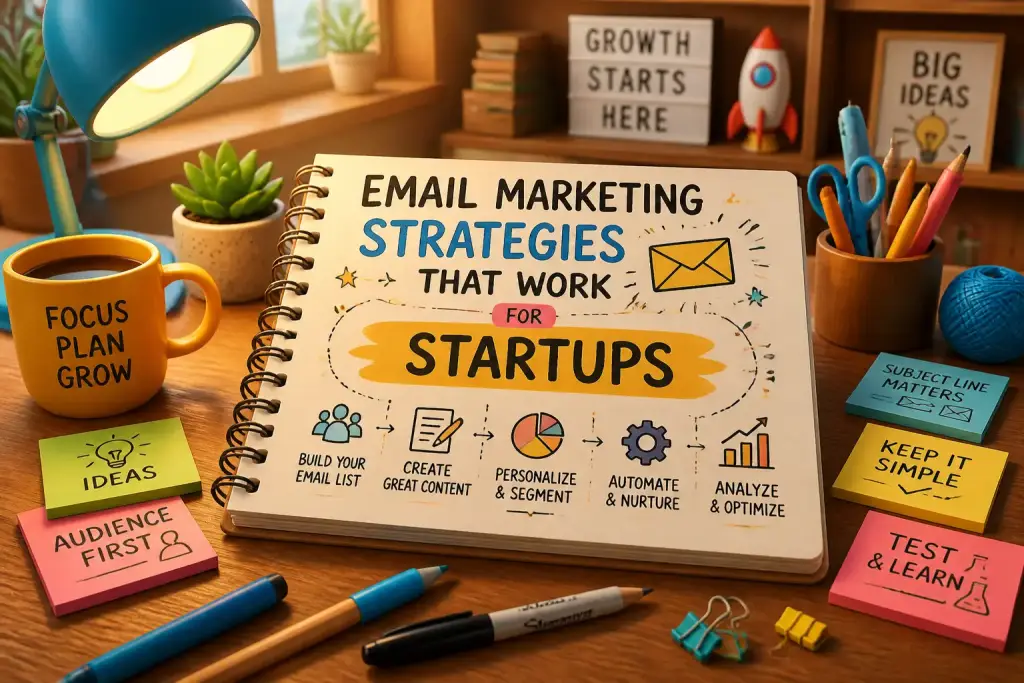
Email marketing remains one of the most effective digital marketing strategies for startups. It allows you to reach your audience directly in their inbox, providing a personal touch. Start by building an email list through sign-up forms on your website and social media platforms. Offer incentives like free resources, discounts, or exclusive content to encourage sign-ups.
Once you have a list, segment your audience based on their interests or behaviors. This allows for personalized email campaigns that cater to different groups. Use email marketing tools like Mailchimp or Sendinblue to create and send your campaigns. Ensure your emails are visually appealing and mobile-friendly, as many users check their emails on mobile devices.
Craft engaging subject lines to increase open rates. Your emails should provide value, whether through informative content, special offers, or updates about your business. Monitor key metrics such as open rates, click-through rates, and conversions to refine your strategy. Regularly test different approaches to find what resonates best with your audience. Explore our list of top email marketing tools to enhance your campaigns.
Analyzing and Measuring Results
Monitoring the effectiveness of your digital marketing strategy is crucial for ongoing success. Without proper analysis, you may not know what works and what needs improvement. Use analytics tools like Google Analytics to track website traffic, user behavior, and conversion rates. These insights will help you identify which marketing channels are most effective and where to allocate resources.
Set specific, measurable goals for your marketing efforts. Whether it’s increasing website traffic, generating leads, or improving conversion rates, having clear objectives allows you to track progress effectively. Use data visualization tools to present your findings in a way that is easy to understand for your team.
Regularly review your marketing campaigns and adjust your strategy based on performance data. This could involve reallocating your budget to more successful channels or tweaking your content based on engagement metrics. Continual optimization is key to staying ahead in the competitive landscape of digital marketing.
Staying Updated with Trends
The digital marketing landscape is constantly changing, so staying informed about trends and emerging technologies is essential for success. Follow industry blogs, attend webinars, and participate in online courses to keep your skills sharp and your knowledge up to date. Join relevant online communities to share insights and learn from others in your field.
Embrace new tools and technologies that can improve your marketing efforts. For instance, artificial intelligence is transforming how businesses analyze data and personalize customer experiences. Explore the latest social media features, such as new ad formats or engagement tools, to keep your strategy fresh and engaging.
Lastly, be open to feedback from your audience. Their preferences may shift over time, and adjusting your strategy accordingly can help maintain relevance. Regularly ask for feedback through surveys or social media polls to gauge audience sentiment. By staying adaptable and informed, your startup can thrive in the fast-changing world of digital marketing.