








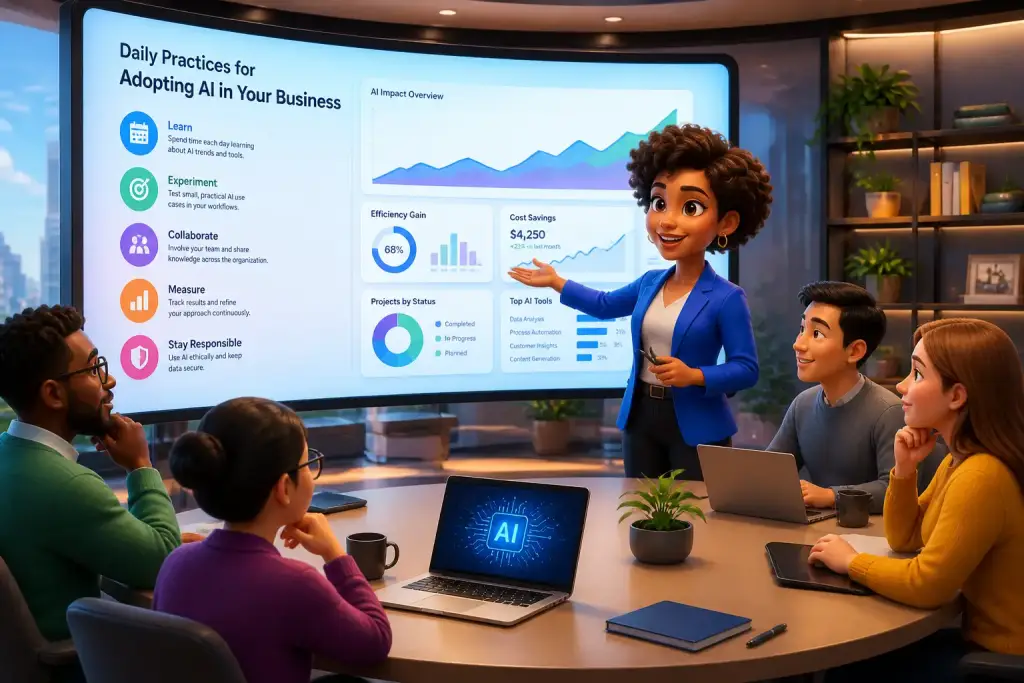
Adopting AI in business is not just a trend; it is a crucial move toward modernizing operations and enhancing productivity. Today, businesses of all sizes can leverage AI tools to streamline processes, increase efficiency, and improve decision-making. However, integrating AI effectively requires thoughtful daily practices. These practices should focus on how to incorporate AI into the daily workflow of teams, making it a part of the company’s culture rather than just a tool. This comprehensive guide outlines daily practices that can help businesses adopt AI successfully.
- Incorporate AI tools into daily workflows for greater efficiency.
- Train employees regularly to leverage AI capabilities effectively.
- Monitor and adjust AI strategies based on feedback and results.
Establish a Clear AI Vision
Creating a clear vision for AI within your organization sets the foundation for successful adoption. This vision should align with your business goals and address specific challenges that AI can help solve. For example, if your business struggles with customer service, your AI vision might prioritize implementing chatbots to enhance customer interaction.
Begin by engaging stakeholders from various departments. Include team members from IT, marketing, sales, and customer service to understand their pain points and how AI can assist. This collaborative approach ensures that you consider multiple perspectives when forming your AI strategy.
Steps to Formulate Your AI Vision
- Identify key business objectives that AI can influence.
- Gather input from diverse teams to pinpoint specific needs.
- Draft a clear statement outlining how AI will support these objectives.
- Communicate this vision across the organization to foster buy-in.
Having a well-defined AI vision also aids in measuring success. By setting specific, measurable goals, you can analyze the effectiveness of your AI initiatives over time. Regularly revisiting this vision helps ensure that your AI strategy evolves with your business needs.
Integrate AI Tools into Daily Operations
Once you have a clear vision, integrating AI tools into daily operations is the next crucial step. Start by identifying processes that can benefit from automation. Tasks that are repetitive or time-consuming are excellent candidates for AI integration. For instance, using AI-driven software to analyze sales data can save hours of manual work.
Begin small. Choose one or two functions to automate initially. This could involve implementing chatbots for customer inquiries or using AI for email sorting and prioritization. The goal is to allow employees to experience how AI can enhance their efficiency, making the transition smoother.
Practical Examples of AI Integration
- Use AI analytics tools to generate reports on sales trends, allowing teams to focus on strategy rather than data collection.
- Implement AI-driven customer relationship management (CRM) systems that provide personalized recommendations based on customer interactions.
- Adopt virtual assistants to schedule meetings and manage calendars, freeing up time for more critical tasks.
As teams grow accustomed to these tools, you can explore additional AI applications. Encouraging feedback during this phase is essential for understanding employee experiences and identifying areas for improvement.
Train Employees on AI Tools
Training is a vital part of integrating AI into your business. Employees need to feel confident using AI tools to maximize their benefits. Regular training sessions can help staff understand not only how to use the tools but also the value they bring to their daily work.
Consider creating a training program that includes various formats, such as hands-on workshops, online courses, and tutorials. This variety caters to different learning styles and helps ensure everyone is on the same page. Additionally, encourage employees to share their experiences and tips with one another, building a culture of learning.
Training Program Framework
- Assess the current skill levels of employees regarding AI tools.
- Develop a training curriculum that addresses various roles within the organization.
- Schedule regular training sessions, both initial and ongoing, to keep skills fresh.
- Encourage peer-to-peer learning by setting up mentorship programs.
By investing in training, you empower employees to utilize AI to its fullest potential. This not only enhances productivity but also boosts morale, as staff feel more competent and valued in their roles.
Encourage a Culture of Experimentation
For businesses to grow with AI, building a culture of experimentation is critical. Encourage teams to test new AI features and tools without fear of failure. This approach not only leads to innovation but also helps identify solutions that genuinely meet business needs.
Set up internal hackathons or innovation days where employees can brainstorm and develop new AI applications relevant to their work. Such events can lead to exciting ideas and promote teamwork as employees collaborate across departments to tackle challenges.
Tips for Fostering Experimentation
- Provide resources for teams to experiment with new AI tools.
- Celebrate both successes and failures to promote a growth mindset.
- Encourage feedback and discussions around new ideas and approaches.
Creating a safe space for experimentation will lead to more innovative solutions tailored to your business’s unique challenges. Additionally, it reinforces the notion that AI is a tool for empowerment, not a threat to jobs.
Regularly Monitor and Adjust AI Strategies
Implementing AI is not a one-time task. Regular monitoring and adjusting of AI strategies are necessary to ensure they remain effective. Set up key performance indicators (KPIs) to track the success of AI initiatives. These metrics can include the time saved on tasks, improvements in customer satisfaction, or increases in sales due to AI-driven insights.
Encourage teams to review these metrics regularly and provide feedback on the tools they are using. This feedback loop is vital for identifying pain points and areas for improvement. Be prepared to adjust your AI strategy based on this feedback and the evolving needs of your business.
Key Metrics to Monitor
- Time saved on repetitive tasks due to automation.
- Customer satisfaction scores before and after AI implementation.
- Sales growth attributed to AI-driven insights.
By proactively monitoring AI strategies, you can ensure that your business adapts to changes in the market and continues to benefit from AI advancements. This ongoing evaluation helps maintain a competitive edge and fosters a culture of continuous improvement.
Start small by integrating AI tools into one department, then expand based on results and employee feedback for smoother transitions.
Building Long-Term AI Capabilities
Establishing long-term AI capabilities requires commitment and foresight. It involves not only implementing tools but also creating an environment where AI can thrive over time. Encourage ongoing education about AI trends and advancements within your industry. This can include attending conferences, subscribing to industry publications, or joining professional networks focused on AI.
As the landscape of AI changes, your business should remain adaptable. Consider investing in advanced AI technologies and platforms that can grow with your business needs. This may involve partnerships with technology providers or hiring experts to guide your AI journey.
Steps for Building AI Capabilities
- Stay informed about the latest AI trends and technologies.
- Invest in partnerships with AI vendors for ongoing support and innovation.
- Encourage continuous professional development for employees.
- Evaluate and update AI tools and strategies regularly to align with business goals.
This forward-thinking approach not only enhances your current operations but also positions your business for future success in a rapidly changing technological landscape. By committing to long-term AI capabilities, you empower your teams and create a resilient organization ready to meet future challenges.

Federica Ferrari
Founder & Lead EditorFederica Ferrari is the founder and lead editor of Business Braintech, based in Italy. She provides readers with practical guidance on emerging technologies for business transformation.