









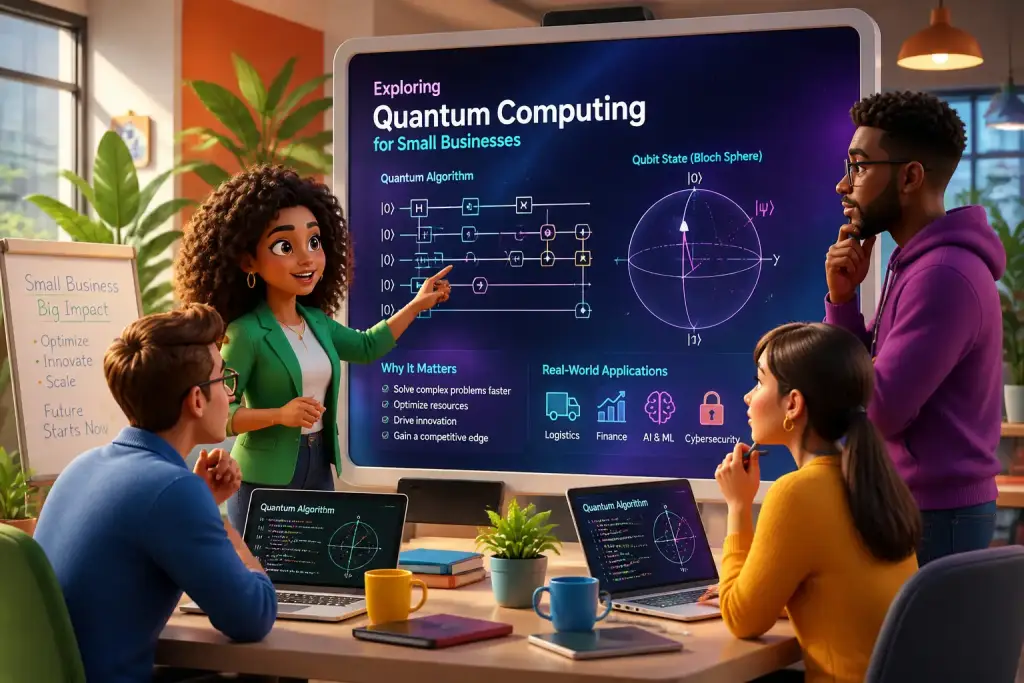
Quantum computing is reshaping how businesses operate and solve problems. Small businesses can harness this technology to gain a competitive edge, improve efficiency, and innovate their services. Understanding how quantum computing functions and its potential applications can empower small business owners to make informed decisions about future investments. This guide provides an in-depth look at how small businesses can explore quantum computing, its benefits, and how to implement it effectively.
- Quantum computing can optimize complex problem-solving for small businesses.
- Embracing quantum technology can lead to significant advancements in data analysis.
- Collaboration with tech experts is essential for successful integration.
The Basics of Quantum Computing
Quantum computing differs from traditional computing in many ways. While classical computers use bits as the smallest unit of data, quantum computers utilize qubits. These qubits can exist in multiple states simultaneously, thanks to the principles of superposition and entanglement. This unique characteristic allows quantum computers to process vast amounts of data much more efficiently than classical systems.
For small businesses, understanding these concepts is crucial. Quantum computing can solve complex problems that would take traditional computers an impractical amount of time. For instance, tasks like optimizing supply chains or enhancing data security become much more feasible. Many small businesses might be hesitant due to the perceived complexity of quantum technology, but breaking it down into manageable concepts can ease this concern.
Key Principles of Quantum Computing
- Superposition: Qubits can represent both 0 and 1 at the same time, allowing for more complex calculations.
- Entanglement: Qubits can be linked together, meaning the state of one can instantly affect another, no matter the distance.
- Quantum Interference: This principle helps amplify the correct answers while canceling out the wrong ones, leading to faster problem-solving.
These principles make quantum computers particularly powerful for certain types of tasks, such as optimization problems, simulations, and complex data analysis. Small businesses in fields like finance, logistics, and healthcare can benefit immensely from these capabilities.
Benefits of Quantum Computing for Small Businesses
Integrating quantum computing brings several advantages for small businesses. First, the ability to process large datasets quickly can lead to improved decision-making. Businesses can analyze consumer behaviors, market trends, and operational efficiency in real time, allowing them to adjust strategies as needed.
Second, quantum computing can enhance security measures. As cyber threats become more sophisticated, quantum encryption methods offer a new level of protection. This can be particularly advantageous for small businesses that store sensitive customer data. By adopting quantum technology, businesses can stay ahead of potential security breaches.
Real-World Applications
- Supply Chain Optimization: Quantum computers can analyze various factors like demand fluctuations and supplier performance, helping businesses streamline operations.
- Financial Modeling: Small financial firms can use quantum computing to simulate market scenarios, improving investment strategies.
- Drug Discovery: In the healthcare sector, quantum computing can accelerate the process of discovering new medications by simulating molecular interactions.
The potential applications are vast. Small businesses that leverage these advancements are likely to see significant improvements in efficiency and effectiveness.
Challenges of Adopting Quantum Computing
Despite its benefits, there are challenges to adopting quantum computing for small businesses. One major hurdle is the cost associated with developing or acquiring quantum technology. The infrastructure needed for quantum computing can be expensive, which may deter small business owners.
Another challenge is the lack of expertise in the field. Quantum computing is still a relatively new area, and finding qualified professionals can be difficult. Many small businesses may not have the resources to hire specialized staff or invest in training existing employees. Without the right knowledge and skills, implementing quantum technology effectively becomes a daunting task.
Strategies for Overcoming Challenges
- Partnerships: Collaborate with universities or tech firms that specialize in quantum technology to gain access to expertise and resources.
- Incremental Adoption: Begin with small-scale quantum projects to test the waters before committing to full integration.
- Continuous Learning: Encourage staff to participate in workshops and training sessions focused on quantum computing.
Addressing these challenges early can help small businesses create a successful strategy for integrating quantum technology.
Start with small projects to understand quantum computing's impact on your business before fully committing to larger integrations.
Steps to Implement Quantum Computing in Your Business
Implementing quantum computing involves several steps. First, businesses should assess their current technology infrastructure. Understanding what systems are in place and how they can incorporate quantum computing is essential. This assessment will help identify areas where quantum technology can be most beneficial.
Next, small businesses need to set clear goals for what they hope to achieve with quantum computing. Whether it’s improving data analysis or enhancing security, having specific objectives will guide the implementation process. For example, a retail business might aim to optimize inventory management using quantum algorithms.
Action Plan for Implementation
- Evaluate Current Technology: Take stock of existing systems and identify integration points for quantum computing.
- Set Clear Objectives: Define what you want to achieve with quantum technology, such as increased efficiency or enhanced security.
- Engage with Experts: Consult with quantum computing specialists to plan your implementation strategy.
- Pilot Program: Start with a small pilot project to test the technology before scaling up.
Following these steps will provide a structured approach to integrating quantum computing into small businesses.
Future Trends in Quantum Computing
The future of quantum computing holds exciting possibilities for small businesses. As technology continues to advance, more accessible and affordable solutions are likely to emerge. Companies such as IBM and Google are already making significant strides in developing quantum hardware and software that can benefit smaller enterprises.
With increasing collaboration between the tech industry and academia, innovations in quantum algorithms and applications will likely accelerate. Small businesses that stay informed about these advancements can position themselves to take advantage of new opportunities. For instance, advancements in quantum machine learning could revolutionize how businesses analyze data and make decisions.
Anticipated Developments
- Improved Hardware: Expect more user-friendly quantum computers that don’t require extensive technical knowledge to operate.
- Cloud-Based Quantum Services: Many providers are likely to offer quantum computing as a service, making it more accessible.
- Enhanced Algorithms: New algorithms that maximize the potential of quantum computing will emerge, improving efficiency and outcomes.
Staying ahead of these trends can help small businesses remain competitive in an increasingly tech-driven market.
Building a Quantum-Ready Culture in Your Business
Creating a culture that embraces technology is vital for any small business looking to implement quantum computing. First, leadership must communicate the importance of innovation and technology adoption to all employees. This can be done through regular meetings, training sessions, and updates on emerging technologies.
Encouraging a mindset of continuous improvement will also help. Employees should feel empowered to suggest new ideas or improvements. For example, implementing a suggestion box or regular brainstorming sessions can foster creativity and collaboration.
Cultivating Tech-Savvy Employees
- Training Programs: Offer resources for employees to learn about quantum computing and its applications in your industry.
- Encourage Experimentation: Allow teams to work on small projects that utilize quantum technology, fostering hands-on experience.
- Celebrate Successes: Recognize and reward teams that successfully implement new technologies or innovative solutions.
By fostering a technology-ready culture, small businesses can ensure that they are prepared to adapt to the changes that quantum computing will bring.
Building Consistency With Embracing Quantum Computing for Competitive Advantage
As quantum computing continues to develop, small businesses must recognize its potential to transform operations and enhance problem-solving abilities. Understanding the basics, benefits, and challenges of quantum technology is essential for making informed decisions. By taking proactive steps and building a culture of innovation, small businesses can position themselves for success in this emerging field. Investing in quantum computing now may be the key to staying competitive in the future. Embrace the journey into quantum technology and watch your business thrive.

Federica Ferrari
Founder & Lead EditorFederica Ferrari is the founder and lead editor of Business Braintech, based in Italy. She provides readers with practical guidance on emerging technologies for business transformation.