









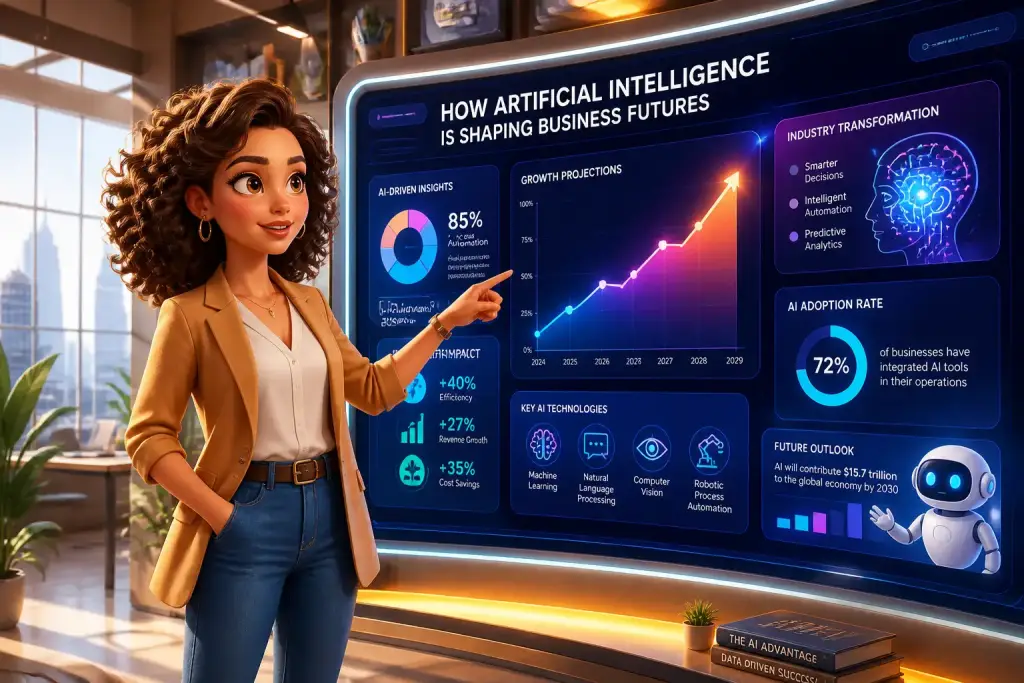
Artificial Intelligence (AI) is not just a buzzword; it is a powerful tool shaping the future of businesses today. Companies across various sectors leverage AI technologies to improve efficiency, enhance customer experiences, and drive innovation. This article explores how AI is transforming business futures, focusing on its impact on operations, decision-making, customer engagement, and industry-specific applications.
- AI enhances business efficiency by automating routine tasks.
- Data-driven decision-making is improved through AI analytics.
- Customer experiences are personalized via AI technologies.
Transforming Operations with AI Tools
The integration of AI into business operations has revolutionized how companies function. Many organizations now use AI-driven tools to automate repetitive tasks, allowing employees to focus on more strategic work. For instance, chatbots handle customer inquiries, process orders, and provide support, freeing up human agents for complex issues. This shift not only boosts productivity but also leads to faster response times.
Consider a retail business that implemented AI for inventory management. By analyzing sales data and customer preferences, the AI system forecasts demand accurately. Consequently, the business reduces overstock and understock situations, leading to significant cost savings. This data-driven approach prevents potential losses and enhances supply chain efficiency.
Another example includes AI-powered project management tools that streamline workflows. These tools analyze team performance and workload, suggesting optimal task assignments. This optimization improves collaboration and ensures project deadlines are met consistently.
Steps to Implement AI in Operations
- Identify repetitive tasks suitable for automation.
- Select appropriate AI tools based on business needs.
- Train employees on the new systems.
- Monitor performance and adjust as needed.
By following these steps, businesses can efficiently incorporate AI tools into their operations, leading to enhanced productivity and streamlined processes.
Data-Driven Decision Making
AI empowers organizations to make informed decisions based on data analysis. Traditional decision-making often relied on intuition or incomplete data, leading to suboptimal outcomes. Today, AI algorithms analyze vast amounts of data quickly, revealing trends and insights that human analysts might overlook. This capability is especially valuable in financial services, where real-time data analysis can detect fraudulent activities.
For example, banks use AI to analyze transaction patterns. When an unusual activity is detected, the system alerts the bank to investigate further. This proactive approach not only protects the bank’s assets but also increases customer trust and satisfaction.
Businesses can use AI to predict market trends. By analyzing social media sentiment, sales figures, and economic indicators, companies gain insights into customer behaviors. This information helps businesses adjust their marketing strategies and product offerings, ensuring they meet changing consumer demands.
Benefits of AI in Decision Making
- Enhanced accuracy in forecasts and predictions.
- Reduced time spent on data analysis.
- Improved risk management through predictive analytics.
These benefits lead to better strategic planning and resource allocation, paving the way for sustainable growth.
Enhancing Customer Engagement with AI
Customer engagement is vital for business success, and AI plays a significant role in enhancing it. Personalized experiences are now the norm, thanks to AI technologies. Businesses use AI to analyze customer data, creating tailored marketing campaigns and product recommendations. This personalized approach increases customer loyalty and encourages repeat purchases.
For instance, e-commerce platforms utilize AI algorithms to suggest products based on browsing history and past purchases. When customers feel understood, they are more likely to make additional purchases. This strategy not only boosts sales but also enhances customer satisfaction.
AI also improves customer service through chatbots and virtual assistants. These tools provide instant responses to customer queries, reducing wait times significantly. Additionally, AI can analyze customer feedback, helping businesses identify areas for improvement in their offerings.
Implementing AI for Customer Engagement
- Gather customer data from multiple sources.
- Utilize AI tools for data analysis and segmentation.
- Create personalized marketing campaigns based on insights.
- Integrate chatbots for round-the-clock customer support.
Implementing these steps helps businesses create meaningful interactions with customers, boosting overall engagement and satisfaction.
Industry-Specific Applications of AI
AI’s influence extends across various industries, each benefiting in unique ways. In healthcare, AI applications assist in diagnosing diseases and predicting patient outcomes. Machine learning algorithms analyze patient data, helping doctors make informed decisions. For instance, AI can identify patterns in medical images, leading to earlier cancer detection.
In manufacturing, AI optimizes production processes through predictive maintenance. Sensors collect data from machinery, allowing AI to predict failures before they happen. This proactive maintenance approach reduces downtime and lowers operational costs.
Retailers also benefit significantly from AI innovations. AI-driven analytics provide insights into customer behavior, enabling businesses to optimize inventory and enhance marketing strategies. Personalized shopping experiences lead to higher conversion rates, demonstrating the power of AI in retail.
Examples of AI in Various Industries
- Healthcare: AI systems assist in diagnosing diseases by analyzing medical images.
- Manufacturing: Predictive maintenance tools prevent machinery failures.
- Retail: AI-driven recommendations enhance customer shopping experiences.
These examples highlight how AI is not just a trend but a transformative force across sectors.
The Future of AI in Business
The future of AI in business looks promising, with advancements expected to shape operations further. As AI technologies evolve, businesses will have access to more sophisticated tools that enhance efficiency and innovation. One emerging trend is the integration of AI with Internet of Things (IoT) devices. This combination will enable businesses to collect and analyze real-time data from various sources, leading to improved decision-making.
Ethical considerations surrounding AI will become increasingly important. Companies will need to address issues related to data privacy and algorithmic bias. By prioritizing ethical AI practices, businesses can build trust with consumers and ensure sustainable growth.
Investments in AI research and development are also expected to rise. Companies that embrace AI early will gain a competitive edge, positioning themselves as leaders in their industries. This trend will likely lead to new business models and revenue streams, fundamentally changing how companies operate.
Preparing for the AI-Driven Future
- Invest in AI training programs for employees.
- Stay informed about emerging AI technologies.
- Develop ethical guidelines for AI usage.
By preparing for these changes, businesses can ensure they remain relevant in an increasingly AI-driven world.
Start small with AI projects to test effectiveness before larger investments. This approach reduces risks and allows for adjustments based on real results.
Embracing AI for Sustainable Growth
Incorporating AI into business strategies is not just about adopting new technology; it is about embracing a mindset of continuous improvement. Companies that successfully integrate AI will likely experience sustainable growth as they adapt to market demands and customer needs. This adaptability is essential in today’s fast-paced business environment.
Organizations must foster a culture that encourages innovation and experimentation. Employees should feel empowered to explore new ideas and technologies without fear of failure. This cultural shift can lead to groundbreaking advancements and drive business success.
Investing in AI is a step toward future-proofing businesses. Companies that prioritize AI initiatives can enhance productivity, improve customer satisfaction, and create new opportunities for growth. The path forward is clear: embracing AI is not an option but a necessity for thriving in the modern business world.
By taking proactive steps, organizations can harness the power of AI to shape their future and remain competitive. Embracing this technology today will pave the way for a successful tomorrow.

Federica Ferrari
Founder & Lead EditorFederica Ferrari is the founder and lead editor of Business Braintech, based in Italy. She provides readers with practical guidance on emerging technologies for business transformation.