







In today’s fast-paced environment, organizations increasingly embrace technology to improve operations and gain a competitive edge. However, tech transformation is not without its challenges. Recognizing and assessing tech transformation risks is crucial for ensuring a successful transition. Understanding these risks can help businesses avoid pitfalls that might lead to project failure, budget overruns, or wasted resources. This article explores various aspects of risk assessment in tech transformation strategies, guiding you through practical steps to mitigate these risks effectively.
- Identify potential risks early in the tech transformation process to ensure better preparedness.
- Engage stakeholders throughout the transformation to align goals and expectations.
- Regularly review and adjust your strategy based on feedback and performance metrics.
Recognizing Common Risks in Tech Transformation
The first step in assessing risks involves identifying common issues that arise during tech transformation. These issues can stem from various sources, including technological limitations, human factors, and organizational dynamics. Understanding these risks will give your team a solid foundation to build upon.
Technological risks often relate to the technology itself. The tools or systems chosen may not integrate well with existing infrastructure, or they might not perform as expected. For example, a company might invest in a cloud solution that lacks the necessary functionalities for its specific needs. In such cases, businesses may face unexpected costs to either customize the solution or switch to a more suitable option.
Human factors can also pose significant risks. Resistance to change is a common issue when implementing new technologies. Employees might feel threatened by new systems, fearing they could lose their jobs or find it challenging to adapt. This resistance can slow down the transformation process, ultimately affecting productivity and morale.
Organizational dynamics play a crucial role in tech transformation as well. A lack of clear communication and alignment among key stakeholders can lead to mismanaged expectations and uncoordinated efforts. For instance, if the IT department and business units do not collaborate effectively, the resulting technology might not meet the actual needs of users.
Steps to Assess and Mitigate Risks
To effectively address tech transformation risks, organizations should adopt a structured approach to risk assessment. This process involves several key steps that ensure all potential risks are identified and managed appropriately.
1. Conduct a Comprehensive Risk Assessment
The first step in mitigating risks is conducting a thorough risk assessment. This assessment should involve interviewing stakeholders, surveying employees, and analyzing existing processes. Gather input from various departments to create a complete picture of potential risks. Consider factors such as:
- Technological compatibility with existing systems
- Employee readiness for change
- Budget constraints and financial implications
- Data security and compliance issues
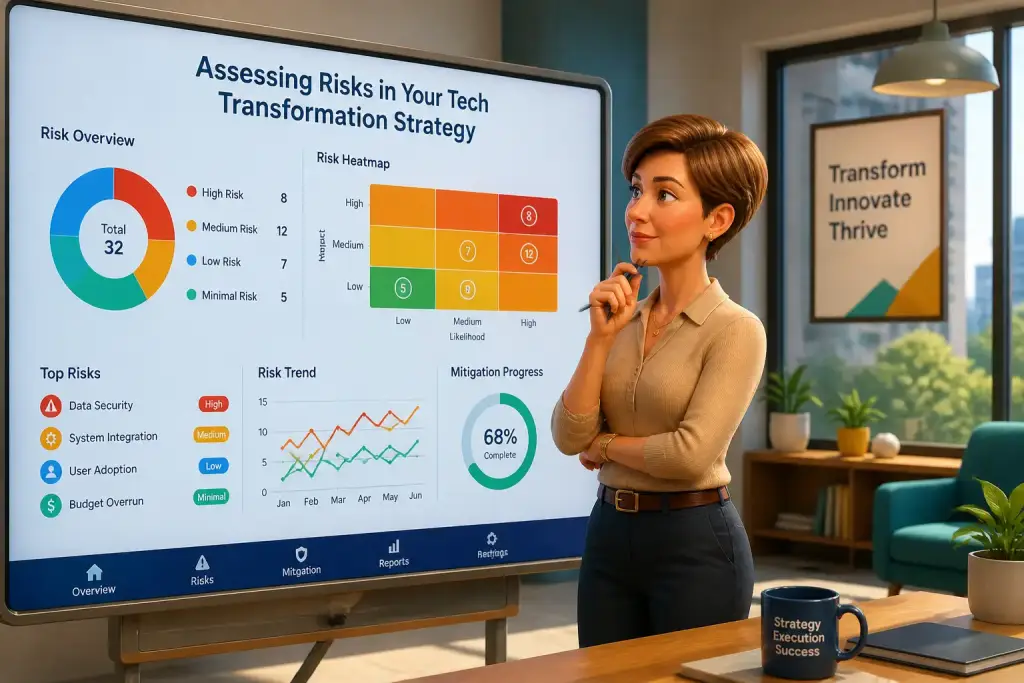
Document your findings and prioritize risks based on their impact and likelihood of occurrence. This prioritization will help your team focus on the most pressing risks first.
2. Develop a Risk Management Plan
Once you have identified the risks, the next step is developing a risk management plan. This plan should outline specific strategies for each risk identified. For example, if employee resistance is a concern, consider implementing training programs that promote understanding and comfort with the new technology. Your plan should also include:
- Roles and responsibilities for addressing each risk
- Specific timelines for risk mitigation actions
- Clear communication strategies to keep stakeholders informed
Having a written plan can guide your team through the transformation process, ensuring everyone knows their roles and responsibilities.
Engaging Stakeholders Throughout the Process
Stakeholder engagement is vital in successfully assessing and mitigating tech transformation risks. Involving key stakeholders from the outset helps ensure that their needs and concerns are addressed, leading to smoother implementation and less resistance.
Building a change management team can be an effective way to facilitate stakeholder engagement. This team should include representatives from various departments, such as IT, HR, and operations. By having a diverse group involved, you can gather a wide range of perspectives and insights. Moreover, regular meetings and updates can help maintain transparency and encourage collaboration.
Consider conducting workshops or focus groups to gather feedback from employees directly affected by the changes. This feedback can provide valuable insights into potential risks you might not have considered otherwise. Additionally, it fosters a sense of ownership among employees, making them feel more invested in the success of the transformation.
Monitoring and Adjusting Your Strategy
Tech transformation is not a one-time event; it requires ongoing monitoring and adjustment. As your organization implements new technology, actively track performance and gather feedback from users. This continuous assessment is crucial for identifying any emerging risks or issues that may arise.
Establish key performance indicators (KPIs) to measure the success of your transformation. Metrics such as user adoption rates, system performance, and overall business impact can provide valuable insights into how well the technology is serving your organization. Regularly reviewing these metrics allows you to adjust your strategy as needed and address any new risks promptly.
For instance, if you notice low user adoption rates, consider providing additional training or support to help employees feel more comfortable with the technology. By being proactive in addressing issues, you can significantly reduce the likelihood of larger problems arising later.
Include a risk management plan in your tech strategy to address potential challenges before they escalate into major issues.
Learning from Real-World Examples
Examining real-world examples can provide valuable lessons in assessing and managing tech transformation risks. Many organizations have faced challenges during their transformations, providing insights into best practices and common pitfalls.
One notable example is a retail company that decided to implement a new inventory management system. Initially, they faced resistance from employees who felt the new system was too complex. To address these concerns, the company organized training sessions that allowed employees to familiarize themselves with the new system in a supportive environment. As a result, user adoption increased, and the system became a crucial part of their operations.
Another example is a financial services firm that underestimated the importance of data security during their tech transformation. After launching their new system, they discovered vulnerabilities that could expose sensitive customer information. This oversight led to reputational damage and regulatory scrutiny. Learning from this experience, they implemented stricter data security protocols in future projects, highlighting the need for thorough risk assessments.
By analyzing these cases, organizations can gain valuable insights into the importance of thorough risk assessment, stakeholder engagement, and ongoing monitoring. These lessons can guide future tech transformation efforts, helping to ensure a smoother transition and successful outcomes.
In conclusion, assessing risks in your tech transformation strategy is an essential step toward ensuring success. By recognizing common risks, adopting a structured approach to assessment, engaging stakeholders, and continuously monitoring your strategy, organizations can handle the challenges of transformation with confidence. With careful planning and execution, the benefits of tech transformation can far outweigh the challenges, leading to improved efficiency, innovation, and growth.

Federica Ferrari
Founder & Lead EditorFederica Ferrari is the founder and lead editor of Business Braintech, based in Italy. She provides readers with practical guidance on emerging technologies for business transformation.