









Table of Contents
Transforming Ideas with Mind Mapping
Mind mapping is a powerful technique that helps individuals and teams organize their thoughts effectively. It visually represents information, enabling clearer understanding and fostering creative thinking. In today’s fast-paced world, where information overload is common, mind mapping serves as a beacon for clarity, guiding individuals through complex topics. Whether for personal projects, academic work, or professional tasks, the ability to map out ideas can be transformative.
- Mind mapping boosts creativity and clarity by visually organizing ideas.
- It aids in breaking down complex topics into manageable parts.
- Using digital tools can enhance collaboration and sharing of mind maps.
At its core, a mind map starts with a central idea placed at the center of the page. From this point, branches extend outward, representing related thoughts or subtopics. This method allows for a non-linear exploration of ideas, contrasting sharply with traditional note-taking, which often follows a linear structure. The creative freedom offered by mind mapping can lead to insights that may not emerge through other organizational methods.
Today, many people use mind mapping for various purposes. For example, students utilize it for studying and project planning, while professionals apply it to brainstorming sessions and strategic planning. The visual nature of mind maps caters to different learning styles, making it an inclusive tool for diverse audiences.
Benefits of Mind Mapping
The advantages of mind mapping are numerous. Firstly, it enhances memory retention. When people create visual representations of information, they engage more parts of their brain, making it easier to remember details. Secondly, mind mapping encourages creativity. The free-form structure allows for spontaneous connections, leading to innovative ideas. Finally, it simplifies complex information. By breaking topics into smaller, manageable parts, individuals can tackle daunting subjects more easily.
Real-World Applications
- Project Management: Teams can outline projects, assign tasks, and track progress through mind maps, ensuring everyone is aligned.
- Brainstorming Sessions: Groups can generate ideas collaboratively, visually connecting thoughts to spark further discussions.
- Studying: Students can summarize textbooks or lecture notes, aiding in revision by visualizing relationships between concepts.
Steps to Create an Effective Mind Map
Creating a mind map can seem daunting at first, but with a structured approach, anyone can master this technique. Follow these steps to produce a clear and effective mind map that serves your needs.
Begin by identifying your central idea. This could be a project title, a question, or a theme. Write this idea in the center of a blank page or digital canvas. Next, think of major categories or subtopics related to the central idea. These will form the main branches of your mind map. Use lines to connect these branches to the central idea, ensuring a clear visual structure.
Once your main branches are in place, start adding details. Think of specific points or ideas that fit under each category. This could include facts, examples, or tasks. Use keywords or short phrases to keep it concise. Incorporating colors, symbols, or images can also enhance your mind map, making it visually engaging and easier to remember.
Tools for Mind Mapping
While traditional pen-and-paper methods are effective, various digital tools can further enhance the mind mapping experience. Software like MindMeister or XMind allows users to create interactive mind maps that can be easily edited and shared. These tools often include templates and collaboration features, making it easy for teams to work together on projects.
Mobile apps such as SimpleMind or iThoughts provide the flexibility of creating mind maps on the go. This accessibility ensures that ideas can be captured whenever inspiration strikes, whether in a meeting or during a commute.
Enhancing Collaboration with Mind Mapping
Collaboration is essential in many fields, and mind mapping can significantly enhance team dynamics. When team members visualize their ideas together, it creates a shared understanding and fosters innovation. Mind maps can serve as a common reference point during discussions, helping to unify diverse perspectives.
To utilize mind mapping in collaborative settings, start by gathering everyone in a central location or using a digital platform. Present the central idea and invite contributions from each team member. As ideas are added, ensure that everyone has a chance to share their thoughts. This inclusive approach promotes engagement and ensures all voices are heard.
After the initial brainstorming session, refine the mind map together. Eliminate redundancies and clarify points that might be confusing. This collaborative effort not only strengthens the final product but also builds team cohesion. Regularly revisiting the mind map during project meetings can keep everyone on track and focused on the central goals.
Using Mind Mapping Software for Teams
When working in teams, software can enhance the mind mapping process. Tools like Miro or Lucidchart offer robust features for real-time collaboration, allowing multiple users to edit and contribute simultaneously. This capability is particularly useful in remote work environments, where face-to-face interaction may be limited.
Consider setting up templates for recurring projects. This saves time and ensures a consistent structure. Teams can also use cloud-based storage for easy access and sharing, allowing members to revisit and update the mind map as needed.
Mind Mapping for Personal Growth
Mind mapping isn’t just for projects; it can also play a vital role in personal development. By mapping out goals, individuals can create a clear path toward achieving them. This method helps clarify what steps are necessary and encourages accountability.
Begin by identifying your personal goals. This could include career aspirations, health objectives, or skills you want to develop. Place these goals at the center of your mind map. Next, branch out with actionable steps to achieve each goal. For instance, if the goal is to improve physical fitness, branches might include creating a workout schedule, finding a gym, or exploring healthy recipes.
Regularly revisiting your personal mind map can help track progress and adapt goals as necessary. This dynamic approach to personal growth keeps individuals motivated and focused on their aspirations.
Reflecting on Personal Achievements
Mind mapping can also be a great tool for reflection. After completing a project or achieving a goal, create a mind map that outlines what worked well and what could be improved. This reflective practice helps individuals learn from their experiences and prepare for future challenges.
Consider incorporating feedback from others into this reflective mind map. Gathering different perspectives can provide valuable insights and enhance future performance. This cycle of reflection and adjustment is crucial for continual personal growth.
Mind Mapping in Education
In educational settings, mind mapping can significantly enhance teaching and learning experiences. Teachers can use mind maps to prepare lessons, outline curriculum, and engage students in a more interactive way. Students, on the other hand, can utilize mind mapping to study and retain information more effectively.
For educators, creating a mind map for a lesson plan can clarify the structure of the class. Teachers can outline key topics, activities, and assessments while ensuring that all necessary content is covered. This visual approach can also help identify gaps in knowledge and areas needing further exploration.
Students benefit from mind mapping by transforming notes into visual outlines. Instead of reading through lengthy texts, students can condense information into main ideas and supporting details, making it easier to study. This method not only aids retention but also makes revising more enjoyable.
Incorporating Mind Mapping into Study Techniques
Mind mapping can be combined with other study techniques to maximize effectiveness. For instance, pairing mind mapping with the Pomodoro Technique can enhance focus and productivity. Students can work in timed intervals, using mind maps to organize their thoughts during breaks.
Students can utilize mind maps to prepare for exams. By summarizing each topic visually, they can quickly review key concepts and relationships, leading to improved performance. This technique blends creativity with academic rigor, making learning more dynamic.
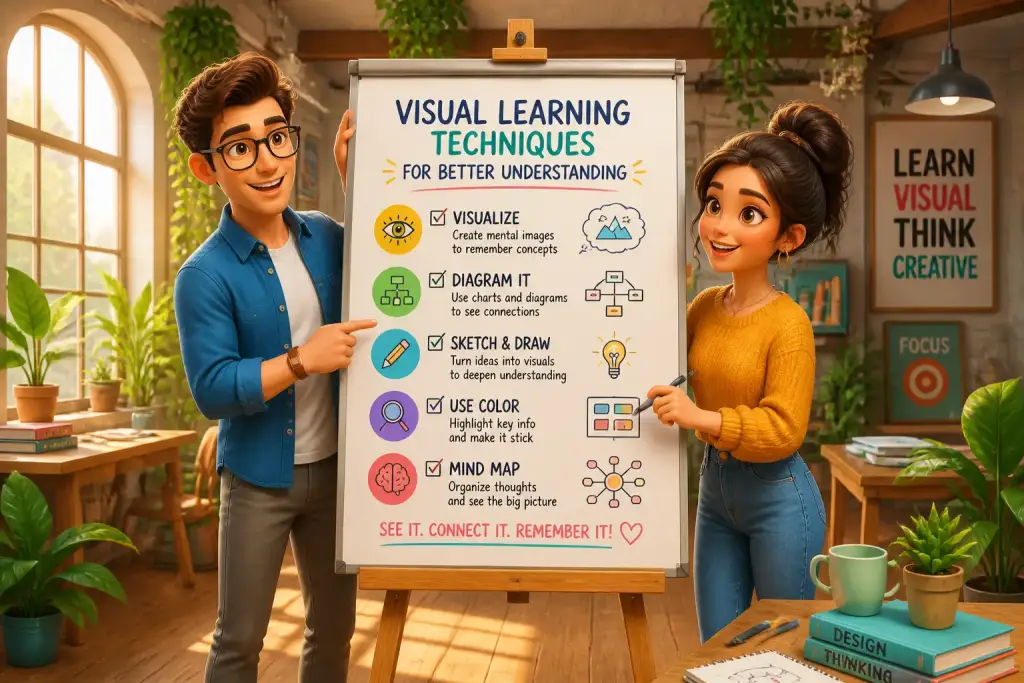
Start with a central idea and branch out, using colors and images to stimulate creativity and enhance memory retention.
Mind Mapping Techniques for Everyday Life
Beyond education and work, mind mapping can enhance everyday life and personal organization. Individuals can apply mind mapping to plan events, track habits, or organize tasks. The versatility of this tool makes it beneficial in various contexts.
Consider planning a family gathering. Start with the main event and branch out with details like the guest list, menu, and activities. This visual structure can help ensure nothing is forgotten and allows for easy adjustments as plans evolve.
Using mind maps for daily tasks can simplify busy schedules. Create a mind map of tasks for the day, categorizing them into urgent and non-urgent items. This method provides visual clarity, helping prevent overwhelm and enhancing productivity.
Habit Tracking with Mind Maps
Mind mapping is also effective for tracking personal habits. Create a map that outlines habits you wish to develop or eliminate. For example, if you want to exercise more, branch out with specific activities, schedules, and motivational quotes. This visual representation can serve as a constant reminder and motivation.
Regularly updating your habit tracker mind map can help assess progress and make necessary adjustments. This practice encourages accountability and fosters personal growth over time.
Putting Embrace Mind Mapping for Success Into Daily Practice
The power of mind mapping lies in its ability to organize thoughts, enhance creativity, and simplify complex information. Its applications span across personal, educational, and professional realms, making it a versatile tool for anyone. By incorporating mind mapping into daily routines, individuals can improve clarity, foster collaboration, and drive personal growth.
As technology continues to evolve, the tools available for mind mapping become increasingly sophisticated. Embracing these tools can enhance the benefits of mind mapping, making it easier to share ideas and collaborate effectively. Whether you choose traditional methods or digital platforms, the key is to start mapping your thoughts today.
Mind mapping is more than just a technique; it is a mindset. By adopting this approach, individuals can unlock their full potential, transforming the way they think, learn, and create. Start your mind mapping journey now and experience the benefits firsthand.