








Table of Contents
- Why Spaced Repetition Works Effectively
- How to Implement Spaced Repetition in Your Study Routine
- Using Technology to Enhance Spaced Repetition
- Practical Examples of Spaced Repetition in Learning
- Benefits of Spaced Repetition Beyond Memory Retention
- Common Misconceptions About Spaced Repetition
- Maximizing Your Spaced Repetition Experience
Why Spaced Repetition Works Effectively
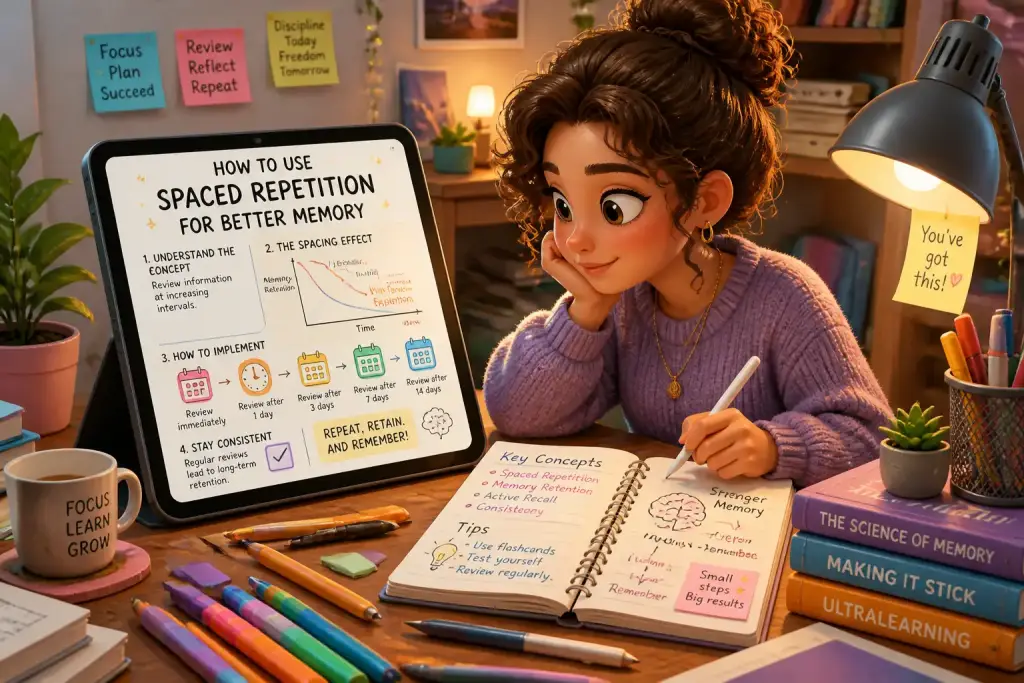
Spaced repetition is a powerful tool for enhancing memory. It relies on the psychological spacing effect, which suggests that information is better retained when reviewed at increasing intervals over time. Instead of cramming information in one sitting, spaced repetition spreads out learning sessions. This approach helps to reinforce memory pathways, making recall easier later. For example, when studying vocabulary, instead of reviewing all words in one day, learners can revisit them over days or weeks.
- Spaced repetition improves long-term retention of information.
- It optimizes review times based on forgetting curves.
- This method can be applied in various learning contexts.
Another reason spaced repetition is effective is due to its alignment with how our brains function. Our brains tend to forget information over time. However, by strategically timing reviews, we can refresh our memory just before we would forget the information. This method takes advantage of the brain’s natural patterns of forgetting, making it a more efficient way to learn. Studies show that learners using spaced repetition techniques retain up to 50% more information than those who do not.
Because spaced repetition is rooted in cognitive science, it can be applied to various subjects. Whether learning a new language or preparing for exams, this technique is versatile. It can also be adapted for digital platforms, allowing learners to track their progress easily. Many popular apps focus on spaced repetition, making it accessible and user-friendly.
How to Implement Spaced Repetition in Your Study Routine
Implementing spaced repetition requires a structured approach. First, identify the material you want to memorize. This could be vocabulary words, historical dates, or any information you need to retain. Next, create flashcards or use an app designed for spaced repetition, such as Anki or Quizlet. Flashcards should contain the question on one side and the answer on the other.
After creating your materials, organize your study schedule. Start with short sessions where you review the material frequently. As you become more familiar, gradually extend the intervals between reviews. For instance, initially review the material after one day, then three days, then a week, and so on. This method ensures that you are regularly revisiting the information but also not overloading your brain.
Steps to Create Your Spaced Repetition Schedule
- Gather your study materials.
- Create flashcards or use a spaced repetition app.
- Start with frequent reviews.
- Gradually increase the time between reviews as you master the material.
- Adjust the schedule based on your comfort level and retention rates.
This structured method can help anyone, from students to professionals, improve their memory and understanding of complex subjects.
Using Technology to Enhance Spaced Repetition
Modern tools make spaced repetition more effective. Many applications are available to help learners implement this technique seamlessly. Apps like Anki, Memrise, and Quizlet offer features specifically designed for spaced repetition. They allow users to track their progress and adjust the review schedule based on performance.
For instance, Anki uses an algorithm that calculates the optimal time for reviewing each flashcard. This means you will get reminders for cards you are struggling with sooner than those you easily remember. By utilizing technology, learners can focus on the areas where they need the most improvement, making study sessions more productive.
Many of these applications provide options for multimedia. Instead of just text, learners can add images, audio, and even videos to their flashcards. This multimedia approach can enhance understanding and retention by catering to different learning styles. Visual learners, for example, may benefit significantly from images accompanying their flashcards.
Practical Examples of Spaced Repetition in Learning
Spaced repetition can be applied in various learning scenarios. Students often use it for language learning, where vocabulary retention is crucial. By frequently revisiting words at spaced intervals, learners can internalize them better. For example, a student might learn ten new words today, review them tomorrow, then again in three days, and finally in a week.
Another example is in studying for exams. Students can create a plan where they cover different subjects in a spaced manner. Instead of studying history for three hours in one sitting, they might study history for an hour, then switch to science the next day, and come back to history after two days. This rotation helps maintain the freshness of the material in their minds.
Real-World Application Scenarios
- Language Learning: Use spaced repetition to master vocabulary and grammar rules.
- Exam Preparation: Rotate subjects and topics using spaced reviews to deepen understanding.
- Professional Development: Apply spaced repetition for learning new skills or concepts related to your job.
These examples illustrate that spaced repetition is not limited to academic settings. It can also be beneficial in professional and personal development contexts, helping individuals stay ahead in their careers and hobbies.
Benefits of Spaced Repetition Beyond Memory Retention
Spaced repetition offers more than just improved memory retention. One significant advantage is that it promotes active learning. When learners engage with material multiple times, they are not just passively reading. Instead, they are actively recalling and applying the information, which reinforces their understanding.
This technique also helps reduce stress associated with cramming. By spreading out study sessions, learners can manage their time better and feel more prepared. This method leads to a more relaxed atmosphere during exams, as students feel confident in their recall abilities. Consequently, they can focus more on applying their knowledge rather than struggling to remember facts.
Spaced repetition encourages self-assessment. By reviewing material at intervals, learners can identify which areas they need to focus on more. This awareness allows for targeted study sessions, making learning more efficient. For instance, if a learner struggles with specific vocabulary, they can prioritize those words in their reviews.
Regularly update your spaced repetition schedule to adapt to what you find most challenging. This adjustment will enhance your retention further.
Common Misconceptions About Spaced Repetition
Despite its effectiveness, some misconceptions exist about spaced repetition. One common belief is that it only applies to memorization tasks. While it is indeed a powerful tool for memory, spaced repetition can also enhance understanding. By revisiting concepts over time, learners solidify their grasp of the material. This is especially true in subjects like math and science, where foundational concepts build on one another.
Another misconception is that spaced repetition requires a significant amount of time. In reality, it can be integrated into short, manageable sessions throughout the day. For example, spending just 10 to 15 minutes reviewing flashcards during breaks can significantly boost retention without overwhelming the learner.
Finally, some may think that spaced repetition is only for students. However, professionals in various fields can benefit from this technique. Whether learning new software, mastering industry terms, or preparing for certifications, adults can use spaced repetition to stay sharp and informed.
Maximizing Your Spaced Repetition Experience
To maximize the benefits of spaced repetition, consistency is key. Establish a regular study schedule and stick to it. By making this practice a habit, you will likely see improved results over time. Additionally, be flexible in adjusting your study plan based on what works best for you. If you find certain subjects or topics more challenging, allocate more time for those areas.
Consider combining spaced repetition with other study techniques. For instance, integrating effective note-taking methods can complement your learning efforts. By actively summarizing and organizing information, you reinforce your memory further. This combination leads to a more comprehensive understanding of the material.
Lastly, prioritize your well-being. Ensure you get enough rest, as sleep plays a vital role in memory consolidation. A well-rested mind is more receptive to learning. By taking care of your body and mind, you create the optimal environment for spaced repetition to work effectively.