







Table of Contents
- Transforming Learning with Visualization Techniques
- The Science Behind Visualization Techniques
- Practical Visualization Techniques for Learning
- Combining Visualization with Other Learning Methods
- Visualization Techniques in Different Learning Environments
- Overcoming Challenges with Visualization Techniques
- Maximizing Success Through Visualization Techniques
Transforming Learning with Visualization Techniques
Using visualization techniques can dramatically improve learning experiences. By engaging the mind in creative ways, learners unlock their full potential. These methods turn abstract concepts into tangible images, making them easier to understand and remember. For instance, visualizing a complex process like photosynthesis allows students to create a mental picture that sticks. This approach not only aids in memorization but also enhances overall comprehension.
- Visualization enhances memory retention and understanding.
- Combining visual techniques with active learning boosts engagement.
- Regular practice of visualization techniques leads to improved academic performance.
Modern educational settings recognize the value of these techniques. Teachers incorporate visual aids such as charts, graphs, and images to support their lessons. Students, too, can benefit from applying visualization in their own studies. Visual learning tools create a dynamic learning atmosphere, moving beyond traditional rote memorization methods.
To effectively use visualization techniques, start by identifying the material you want to learn. Then, create mental images or diagrams that represent this information. Additionally, consider combining these techniques with other learning strategies for a more comprehensive approach. For example, pairing visualization with goal-setting strategies can amplify learning outcomes. This method aligns well with setting SMART goals for learning success.
The Science Behind Visualization Techniques
Research shows that visualization techniques can enhance cognitive processes. By activating different areas of the brain, these methods improve memory retention and information processing. When learners visualize information, they engage both the analytical and creative parts of their brains. This dual engagement leads to a more profound understanding of the material.
Studies indicate that visual learners often perform better than those who rely solely on auditory methods. For example, a student who visualizes a historical event through images or a timeline typically retains more information than one who only reads about it. This phenomenon occurs because visual representations create stronger mental connections.
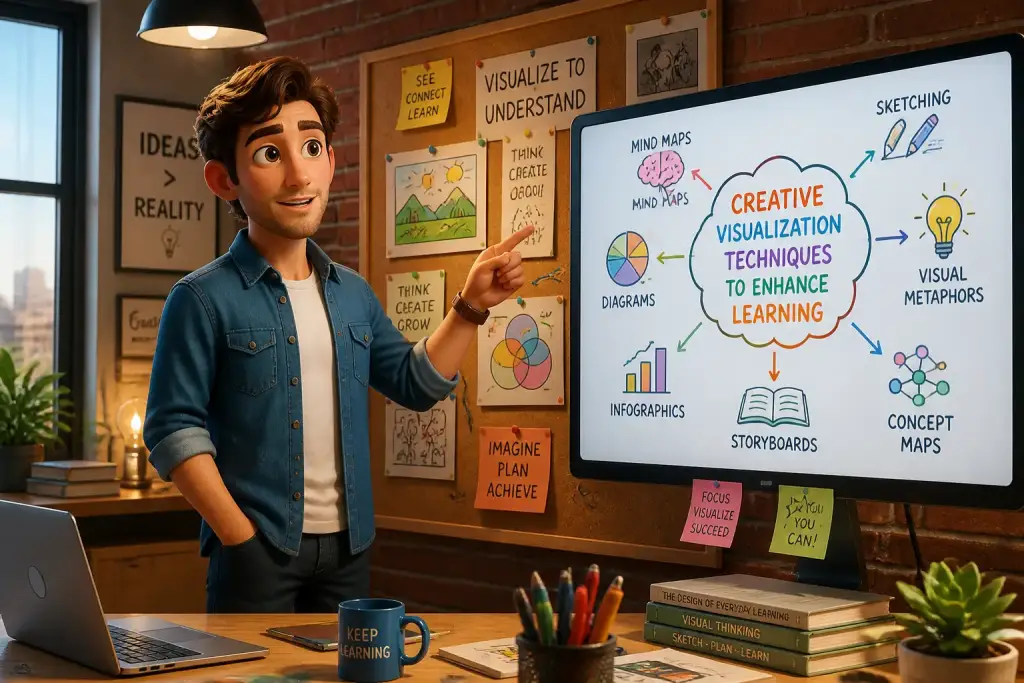
To incorporate these techniques into everyday learning, consider using mind maps or flowcharts. These tools can break down complex subjects into manageable sections. Begin with a central idea, then branch out to related concepts. This method not only organizes information but also makes it visually stimulating, which enhances memory retention.
Practical Visualization Techniques for Learning
Several practical visualization techniques can enhance your learning experience. Here are some effective methods to consider:
- Mind Mapping: This technique involves creating a visual representation of ideas and concepts. Start with a central theme and branch out with related topics, allowing for a clear, organized view of the subject matter.
- Visualization Exercises: Close your eyes and picture the information you need to learn. Imagine a scenario where you apply this knowledge, engaging all your senses for a richer experience.
- Infographics: Create or study infographics related to your topic. These visual tools condense information into digestible formats, making complex data easier to understand.
- Sketch Notes: Combine traditional note-taking with drawing. As you listen to lectures or read, draw symbols and images that represent the key points.
Each of these techniques can be tailored to fit individual learning styles. Experiment with different methods to discover which works best for you. By integrating these visualization tools into your study routine, you can significantly improve your retention and understanding of the material.
Combining Visualization with Other Learning Methods
Visualization techniques work best when combined with other learning strategies. For instance, pairing visualization with repetition can reinforce memory. When you visualize information multiple times, it solidifies your understanding. This practice can be especially beneficial for language learning. Regularly visualizing vocabulary words in context helps learners remember their meanings and proper usage.
Active engagement is also essential. Instead of passive reading, actively visualize the content. Ask yourself questions about the material and create mental images that address these queries. This method encourages deeper processing and critical thinking.
Another effective approach is to create storylines around the material. For example, when studying scientific concepts, imagine a narrative that incorporates these ideas. This storytelling method can make complex subjects more relatable and memorable. It combines visualization with creative thinking, leading to a richer learning experience.
Step-by-Step Guide to Effective Visualization
To implement effective visualization techniques, follow these steps:
- Identify Key Concepts: Determine the main ideas or topics you want to learn.
- Create Visual Representations: Use mind maps, diagrams, or sketches to represent these concepts visually.
- Engage Your Senses: When visualizing, imagine sounds, smells, and feelings associated with the material. This multisensory approach enhances memory.
- Review Regularly: Revisit your visual aids and mental images often to reinforce learning.
- Apply Knowledge: Use your visualization to practice or explain what you have learned, ensuring a deeper understanding.
Integrate visualization techniques into your daily routine for consistent improvement in learning and retention. Practice regularly for the best results.
Visualization Techniques in Different Learning Environments
Visualization techniques are versatile and can be applied in various learning environments. In classrooms, teachers can use visual aids to complement their lessons. For example, using slideshows with images, videos, and infographics can make lessons more engaging. Students who visually process information are likely to grasp concepts more quickly.
Online learning platforms also leverage these techniques. Many courses include interactive visuals and animations to illustrate complex ideas. This approach helps maintain learner interest and improves retention. Learners can also create their own visual aids while studying online, making the experience more personalized.
Group study sessions can benefit from visualization techniques as well. Working together, students can create collective mind maps or diagrams. This collaboration encourages discussion and facilitates a deeper understanding of the material. Engaging in group visualization exercises can also make learning more enjoyable.
Overcoming Challenges with Visualization Techniques
While visualization techniques offer numerous benefits, some learners may face challenges when implementing them. One common issue is difficulty in creating mental images. If this occurs, start with simple concepts and gradually work towards more complex ones. Practice visualization daily to improve this skill. The more you visualize, the easier it becomes.
Another challenge is distractions. In today’s fast-paced world, staying focused is crucial for effective visualization. To combat this, create a dedicated study space. A quiet environment with minimal distractions can enhance concentration. Additionally, consider using tools like timers to maintain focus during study sessions.
Finally, some students may feel overwhelmed by the amount of information to visualize. Break topics into smaller sections and tackle them one at a time. This method prevents information overload and allows for a more manageable learning experience. Regularly review your visual aids to reinforce understanding before moving on to new material.
Maximizing Success Through Visualization Techniques
Implementing visualization techniques successfully involves consistent practice and adaptation. Regularly assess your learning methods and adjust as needed. As you become more comfortable with visualization, explore new techniques and tools that align with your learning style. Embrace creativity in your approach, which can lead to even greater insights and understanding.
Remember to integrate visualization techniques with other strategies for the best results. Combining methods can create a rich learning experience, making it easier to absorb and retain information. These techniques can lead to significant improvements in academic performance and personal growth.
Finally, consider sharing your visualization experiences with peers. Discussing techniques and their outcomes can inspire others and foster a collaborative learning environment. Engaging with others encourages accountability and motivates everyone to explore visualization methods effectively.