








Table of Contents
Reflection in Learning: A Vital Practice
Reflection in learning serves as a powerful tool for students and professionals alike. This process helps individuals assess their understanding and experiences, leading to improved learning outcomes. When students take the time to think about what they have learned, they create connections between new knowledge and previous experiences. This makes the information more meaningful and easier to recall later. Without reflection, learning can become a passive activity where information is quickly forgotten.
- Regular reflection improves comprehension and retention of information.
- Setting specific reflection goals enhances personal learning experiences.
- Engaging with peers during reflection fosters deeper insights and collaboration.
In today’s fast-paced world, where information is abundant, reflection is often overlooked. However, incorporating reflection into the educational process can significantly enhance learning. Students who engage in reflective practices are more likely to develop critical thinking skills. They can analyze their experiences, question their assumptions, and adapt their strategies for future learning. Thus, reflection is not just a nice-to-have; it is essential for effective learning.
Many educational institutions now emphasize the importance of reflection as part of their curricula. Teachers encourage students to maintain learning journals, participate in group discussions, and engage in self-assessments. These activities promote reflection and help students articulate their thoughts and feelings about their learning experiences. For instance, a student might reflect on a project by writing about what strategies worked, what did not, and how they might approach a similar task in the future. This process fosters a growth mindset, allowing learners to view challenges as opportunities for improvement.
How Reflection Enhances Understanding
Reflection enhances understanding by allowing learners to process new information actively. Instead of merely memorizing facts, students analyze what they have learned and why it matters. This deeper engagement leads to better retention and comprehension. For example, after a science lesson, students may reflect on the concepts discussed by linking them to real-life situations. This connection not only reinforces their learning but also makes it relevant.
Reflection aids in identifying gaps in knowledge. When students take time to think about what they understand and what they find confusing, they can seek clarification. This proactive approach ensures that they do not move forward with misconceptions. Teachers can also use students’ reflections to tailor their instruction, addressing areas where students struggle the most.
Incorporating reflection into group work further enhances understanding. When students collaborate, they can share their insights and learn from each other. By discussing their reflections, they gain diverse perspectives that enrich their learning experience. This interaction fosters a supportive learning environment where students feel comfortable expressing their thoughts and questions.
Practical Steps for Reflection
- Set aside dedicated time for reflection after each learning session.
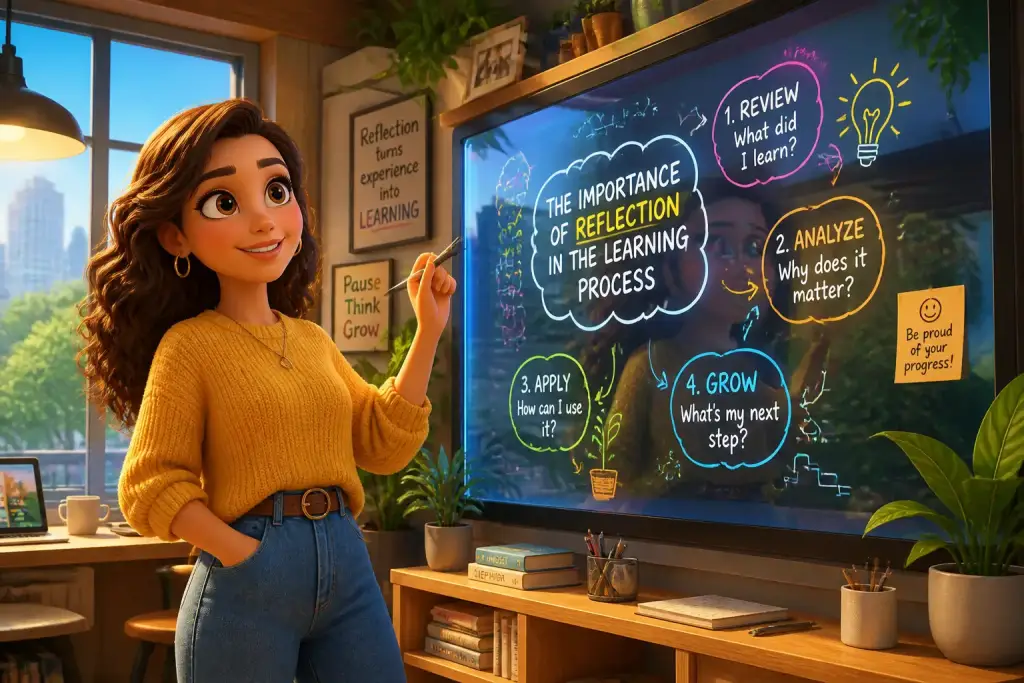
- Ask yourself guiding questions such as, “What did I learn today?” and “How can I apply this knowledge?”
- Write down your thoughts in a learning journal to track your progress.
- Share your reflections with peers or mentors for additional insights.
The Emotional Aspect of Learning Reflection
Reflection is not just about cognitive processing; it also involves emotional engagement. Learning can be a rollercoaster of emotions, and reflecting on these feelings is crucial. Students often experience frustration, joy, or confusion during their learning journeys. By acknowledging these emotions, learners can better understand their experiences and motivations.
For instance, a student may feel overwhelmed by a challenging assignment. Reflecting on this feeling allows them to explore why they feel that way. Are the expectations too high? Do they lack confidence in their skills? Identifying these emotions helps students develop coping strategies and resilience. They can learn to approach challenges with a positive mindset, knowing that feeling uncomfortable is part of the learning process.
Emotional reflection can enhance motivation. When students recognize the joy of mastering a concept or the satisfaction of completing a project, they become more inclined to engage in future learning. Celebrating small victories reinforces positive emotions associated with learning, making it a more enjoyable process.
Creating an Emotional Reflection Framework
- Encourage students to express their feelings about learning experiences.
- Incorporate mindfulness practices to help them focus on their emotions.
- Use art or journaling as tools for emotional expression.
Set aside 10 minutes daily to reflect on what you learned and how you can apply it in the future.
Reflection Techniques for Different Learning Styles
Not all learners approach reflection in the same way. Different learning styles require tailored reflection techniques. For visual learners, using diagrams or mind maps can help organize thoughts and insights. This method allows them to see connections visually, enhancing their understanding.
Auditory learners might benefit from discussing their reflections with peers or recording their thoughts aloud. This verbal processing helps them articulate their insights and reinforces their learning. Kinesthetic learners can engage in hands-on activities, such as role-playing or building models, to reflect on their experiences actively.
For instance, a student who learns best through movement might reflect on a science project by conducting experiments in their backyard. By applying their knowledge in a practical setting, they reinforce what they have learned while enjoying the process. Understanding one’s learning style can significantly enhance the effectiveness of reflection.
Examples of Reflection Techniques by Learning Style
- Visual Learners: Create visual maps or charts summarizing key concepts.
- Auditory Learners: Participate in group discussions to verbalize thoughts.
- Kinesthetic Learners: Engage in physical activities related to the learning material.
Integrating Reflection into Daily Learning Routines
Integrating reflection into daily routines can significantly boost learning outcomes. Establishing a habit of reflection requires consistency and commitment. Students can start by dedicating a few minutes at the end of each day to think about what they learned. This practice helps them consolidate knowledge and prepare for the next day.
Creating a structured routine can also enhance the effectiveness of reflection. For example, students can use a simple template to guide their reflections. They might include sections for what they learned, what challenges they faced, and how they plan to overcome them in the future. This framework provides a clear path for reflection and makes it easier to track progress over time.
Teachers play a crucial role in supporting this integration. By modeling reflective practices in the classroom, they can encourage students to adopt similar habits. For instance, a teacher might share their reflections on a lesson, showing students that reflection is a valuable part of the learning process. When students see their teachers engaging in reflection, they are more likely to follow suit.
Steps to Create a Daily Reflection Routine
- Choose a specific time for reflection, such as after classes or before bed.
- Use a consistent format for recording reflections, like a journal or digital app.
- Review reflections weekly to identify patterns or areas for improvement.
Reflection as a Tool for Lifelong Learning
Reflection is a vital component of lifelong learning. As individuals progress through various stages of life, the ability to reflect on experiences and lessons learned becomes increasingly important. This practice allows people to adapt to new challenges and environments continuously.
In the workplace, for instance, professionals who engage in regular reflection are more likely to identify areas for growth. They can evaluate their performance, seek feedback, and develop strategies for improvement. This proactive approach not only enhances individual skills but also contributes to overall team success.
Reflection fosters a culture of learning within organizations. When team members share their reflections and insights, they create an environment conducive to innovation and collaboration. This open exchange of ideas encourages everyone to learn from each other’s experiences and mistakes, ultimately leading to better outcomes.
Encouraging Reflection in the Workplace
- Implement regular feedback sessions to discuss performance and learning.
- Provide opportunities for employees to share their reflections in team meetings.
- Encourage a growth mindset by recognizing and celebrating lessons learned from failures.